

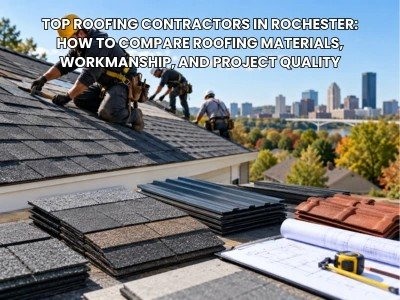
Choosing among the Top Roofing Contractors in Rochester: How to Compare Roofing Materials, Workmanship, and Project Quality requires more than comparing the lowest estimate. A roofing project is a major investment, and the final result depends on several factors, including the roofing material, installation methods, workmanship, ventilation, flashing, weather protection, cleanup, and warranty coverage.
There are many roofing companies to choose from in Rochester, NY. The Rochester area is served by dozens of roofing contractors that are listed in the present local directories, and their list includes roofing companies that offer residential roofing, commercial roofing, roofing repair, roofing inspection, roofing replacement, and various roofing systems.
It is important to compare these. But many people assume that a contractor with numerous reviews is the best option for a specific roof. Similarly, the lowest bid quote may not include the same materials, preparation, warranty, or workmanship as a more comprehensive quote.
When hiring roofing contractors Rochester NY, this guide offers you a handy reference to check for materials, installation quality, project management, communication, and final results.
Why Roofing Contractor Comparison Matters
A roof keeps the house structure dry and safe from rain, snow, wind, ice and temperature. Installation can be an issue even if the best materials are used.
For instance, a contractor might install high-quality shingles, but the roof deck could not be properly prepared, the flashing could be improperly installed, ventilation isn’t sufficient, or the manufacturer’s instructions are not adhered to.
That’s why homeowners should consider the overall roofing system instead of just the shingles on the exterior of the roof.
A helpful comparison is to take into account:
- Roofing materials
- Installation methods
- Contractor experience
- Workmanship
- Roof preparation
- Flashing
- Ventilation
- Underlayment
- Warranty
- Project communication
- Cleanup
- Final inspection
Start by Comparing the Roofing Material
Different roofing materials have different characteristics, costs, maintenance requirements, and expected service lives.
Some of the most common roofing materials found in Rochester are asphalt shingles, metal roofing, flat roofing systems, slate, tile, and other specialty roofing materials. Local contractors who service Rochester will market their knowledge of various roofing systems such as asphalt, metal, EPDM, TPO, and more.
| Roofing Material | Common Advantages | Considerations |
| Asphalt shingles | Affordable, widely available, many styles | Quality varies by product |
| Metal roofing | Durable and available in different styles | Higher initial investment |
| Slate | Long-lasting and distinctive appearance | Heavy and expensive |
| Tile | Durable and attractive | Weight and installation requirements |
| EPDM | Common for flat/low-slope roofs | Requires appropriate installation |
| TPO | Used for many flat/commercial applications | Installation quality is important |
The most appropriate material will depend on the building, roof design, budget, appearance, maintenance requirements, and the contractor’s skills and experience.
Compare the Exact Products, Not Just “Shingles”
There are two contractors that quote an asphalt shingle roof and offer two entirely different products.
Ask for the exact:
- Manufacturer
- Product name
- Shingle type
- Color
- Warranty classification
- Underlayment
- Ice and water protection
- Ridge ventilation products
- Flashing materials
- Fasteners
This helps in comparisons of estimates.
For example, a standard architectural shingle system might be one option, and a higher-performance shingle system with additional manufacturer components might be another option.
If you simply compare the price without product details, it would be misleading.
Evaluate the Roof Deck Preparation
Visible roofing material constitutes just a portion of the roof.
Contractors need to check if the roof deck underneath is damaged or deteriorated before installing roofing.
In some cases, the damaged decking can be mended and in others, replaced.
Ask each contractor:
- Will the existing roof be removed?
- Will the decking be inspected?
- How is damaged decking priced?
- Is replacement included in the estimate?
- Will photographs be provided?
- What happens if hidden damage is discovered?
A clear answer can prevent unexpected disagreements during the project.
Examine the Underlayment and Water Protection
The underlayment is an additional protective material under the main roofing material.
Your proposal should indicate what type of underlayment you are installing and where extra water protection will be installed.
Homeowners should also inquire with contractors about the roof’s design with regard to snow, ice, and water management for Rochester’s climate.
When two quotes refer to “full installation,” don’t take it for granted that they’re offering the same degree of protection.
Pay Attention to Flashing
Flashing is installed around places where water may penetrate or where various surfaces come together.
Here are some common places for flashing:
- Chimneys
- Skylights
- Roof valleys
- Walls
- Vents
- Plumbing penetrations
- Dormers
- Roof edges
Leaks can occur even if the roof looks new if the flashing isn’t installed properly.
Ask contractors how existing flashing will be evaluated, and if existing flashing is damaged or outdated, it will be replaced.
Compare Ventilation Systems
Another aspect of project quality that homeowners must discuss with roofers is roof ventilation.
It is important that the roofing contractor assess the airflow in the attic or roof system and the current ventilation system to determine proper airflow.
The following is a list of possible activities in a project, depending on the roof design:
- Ridge vents
- Soffit vents
- Intake ventilation
- Exhaust ventilation
- Other ventilation systems
A roof should not only address pre-existing ventilation issues.
Inquire from the contractor about the existing ventilation and the need for improvements.
Look at Workmanship, Not Just Materials
The quality of the materials is not enough to make up for the lack of quality in installation.
Ask professional roofers Rochester how they ensure quality in their installations.
Important questions include:
- Who will install the roof?
- Are employees or subcontractors performing the work?
- Who supervises the crew?
- How experienced is the installation team?
- Are manufacturer installation requirements followed?
- Who performs the final inspection?
There are also roofing companies in Rochester that have other staffing models. This is why it’s crucial for homeowners to ask about project supervision, but not take it for granted that every contractor works this way.
Compare Installation Details
A detailed proposal should go beyond “remove old roof and install new shingles”.
Look for information about:
- Tear-off
- Deck inspection
- Decking replacement
- Underlayment
- Ice and water protection
- Drip edge
- Flashing
- Ventilation
- Shingle installation
- Ridge or hip materials
- Pipe boot replacement
- Cleanup
- Final inspection
The greater the clarity of the scope, the easier it is to compare contractors.
Check the Contractor’s Local Experience
Local experience is useful as Rochester roofing projects can need to consider snow, ice, wind, a heavy amount of rain, changes in temperature, and older housing stock.
Rochester roofing directories are updated to include information on local roofers for residential and commercial buildings and the types of roofing materials and conditions for which they offer repair or replacement services.
Inquire about the length of time that the company has been providing services to the Rochester region and if the company regularly works on properties that are comparable to yours.
Experience should be relevant to the project being done and not just the number of years the company has been in business.
Review Previous Projects
Inquire of contractors if they have any examples of comparable projects that they have finished.
Search for projects using:
- Similar roof pitch
- Similar roofing material
- Similar home style
- Similar roof complexity
- Comparable repair or replacement requirements
Photographs will help, but completed projects will be more informative if the contractor can explain what work was done and what materials were used.
Compare Customer Reviews Carefully
Feedback in the form of reviews can be helpful for communication, scheduling, cleanliness, responsiveness, and customer experience.
The number of reviews and ratings that roofers receive for their work varies widely, as seen in the current Rochester roofing listings.
But don’t take just one review as a reference point for judging a contractor.
Instead, look for repeated patterns involving:
- Quality of workmanship
- Communication
- Project organization
- Cleanup
- Responsiveness
- Estimate accuracy
- Warranty support
Also check how recently reviews were posted.
Do Not Compare Estimates by Price Alone
Suppose that three estimates are provided:
| Contractor | Estimate | Materials | Scope |
| Contractor A | $9,500 | Standard | Basic replacement |
| Contractor B | $11,200 | Premium | Detailed system |
| Contractor C | $13,000 | Premium | Additional protection |
Not all the lowest prices are necessarily the best.
Contractor B may include materials and preparation that Contractor A has excluded. Contractor C may provide additional services that explain the difference.
When comparing, check out what is contained first before comparing the final price.
Check What the Warranty Actually Covers
There are different parts to roofing warranties.
Ask about:
- Manufacturer warranty
- Workmanship warranty
- Material defects
- Installation defects
- Transferability
- Warranty registration
- Exclusions
- Maintenance requirements
Please do not assume that a “lifetime” material warranty implies that all future roofing issues are covered by the manufacturer.
Be sure to understand the warranty in layman’s terms and have the contractor present any warranty documentation.
Ask About Subcontractors
The subcontracting isn’t necessarily a bad thing, but it is important for homeowners to know who will be working on their home.
Ask:
- Will subcontractors be used?
- Who employs the crew?
- Who supervises them?
- Who is responsible for workmanship?
- Are subcontractors properly insured?
- Who handles warranty issues?
When the final project is done, it’s easier to understand who did what.
Evaluate Project Communication
Any roofing project has the potential for unforeseen circumstances, inclement weather, delivery delays of materials, and alterations to the original project scope.
A good contractor should know how to communicate.
Before hiring, ask:
- Who is my main contact?
- How will schedule changes be communicated?
- How are additional costs approved?
- Will progress photographs be provided?
- Who answers questions during installation?
- Who performs the final walkthrough?
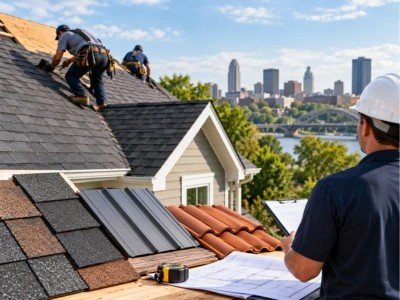
With good communication, a complex project can be a lot easier to manage.
Consider Rochester Weather When Planning the Project
The weather can impact roofing schedules. Various conditions such as snow, rain, wind and temperature variations may affect the time of roofing activity.
A contractor should be able to provide an explanation of how the weather will influence:
- Installation dates
- Material handling
- Worker safety
- Tear-off scheduling
- Temporary protection
- Project completion
Do not choose a contractor solely because they promise the fastest possible completion. Ask whether the proposed schedule is realistic for the work and season.
Check Property Protection and Cleanup
The replacement of roofs produces waste.
A project plan should outline the steps the contractor will take to protect:
- Landscaping
- Windows
- Siding
- Driveways
- Outdoor equipment
- Decks
- Walkways
Cleanup should also be part of the written scope.
Some Rochester contractors explicitly outline debris removal and magnetic nail sweeps in their service descriptions.
Discuss with the children what is used for what and what happens to the old shingles, nails, packaging, and other construction waste when it’s done.
Look for a Complete Roofing System
A roof is not a shingle roof.
A quality project may include:
Roof Deck + Underlayment + Ice/Water Protection + Flashing + Ventilation + Shingles + Ridge System + Gutters
The specific materials will depend on the property and roofing system.
When comparing the best roofers Rochester, ask each contractor to explain how these components work together.
Questions to Ask Roofing Contractors Rochester NY
If you’re thinking about hiring a roofing company, here are some questions you should ask before you sign a roofing contract:
- What exact roofing products are included?
- Will the existing roof be totally removed?
- What will be done with damaged decking?
- What underlayment is provided?
- How will flashing be inspected?
- Is there ice and water protection in the project?
- Will roof ventilation be provided?
- What will be the supervision of the installation?
- Are subcontractors involved?
- What will be part of the clean-up?
- What warranties apply?
- What is the procedure for approving unexpected costs?
- What will be done if there are delays due to the weather?
- Are there photos of the project available?
- Who makes the final inspection?
Establishing clear communication prior to the beginning of work will avoid confusion later.
Signs of a High-Quality Roofing Project
Once done, the owners of the home should check in for cleanliness and tidiness.
Quality signs can be manifested as:
- Straight and consistent shingle lines
- Properly installed flashing
- Clean roof edges
- Secure vents
- Proper ridge installation
- No visible loose materials
- Clean gutters
- No construction debris
- Protected landscaping
- Professional documentation
A final inspection should also include a check on the project to ensure that it has proceeded to the extent that it was agreed.
How to Choose Among the Top Roofing Contractors in Rochester
Top Roofing Contractors in Rochester should not be taken as a mere ranking system. Some contractors might be more suitable for certain projects than others.
Rochester current listings show that local businesses have different roofing experience, roofing specialties, materials used, types of projects, and number of customer reviews available.
Don’t just select a contractor based on their website ranking, but rather on your needs.
A homeowner replacing an asphalt shingle roof might be more concerned with the residential experience and the quality of the material. The contractor a commercial owner may require will have experience in TPO, EPDM or other low-slope roofing systems.
So the first question in the right comparison is for the property and project requirements.
Final Thoughts
When deciding between roofing companies Rochester NY one must take the following factors into consideration: materials, workmanship, installation process, communication, warranties, and project management.
Avoid just finding the lowest bid or the top-rated online. Inquire about what each contractor is offering and compare the full roofing system.
Often the best questions are simple:
What materials are included?
How will the roof be prepared?
Who will install it?
How will flashing and ventilation be handled?
What happens if hidden damage is found?
What does the warranty cover?
How will the property be protected and cleaned?
These things can give homeowners an idea of the Top Roofing Contractors in Rochester they choose when making their decision.
Installing new shingles over an old roofing job is not a quality roofing job. It’s about designing and installing a roofing system that will keep the roof safe, withstand the weather, and be reliable over the years.
FAQs
1. How can I verify whether a roofing contractor has completed similar projects?
Ask for recent examples of comparable roofs and request references when available. This can help you evaluate relevant experience before hiring.
2. Should roofing estimates include measurements of the roof?
A detailed estimate should explain the project’s scope and materials. Accurate measurements help contractors calculate quantities and create a clearer proposal.
3. Can homeowners request a written roofing contract?
Yes. A written contract can document the agreed scope, materials, payment terms, responsibilities, warranties, and other important project details.
4. What should be included in a roofing material delivery?
The delivery should match the products and quantities specified in the contract. Homeowners can verify product labels and report discrepancies promptly.
5. Why should homeowners keep leftover roofing materials?
Keeping appropriately labeled leftover materials can be useful for future repairs because the exact product, style, and color may otherwise become difficult to match.
6. How can roof complexity affect project planning?
Multiple roof sections, valleys, dormers, skylights, and unusual angles can require additional measurements, materials, labor, and installation planning compared with simpler roofs.
7. Should gutters be discussed when comparing roofing contractors?
Yes. Gutters connect closely with roof drainage, so homeowners should clarify whether existing gutters remain, require adjustment, or are included in separate work.
8. What should happen if the contractor discovers unexpected structural damage?
The contractor should document the condition, explain the recommended repair, provide the associated cost, and obtain appropriate approval before performing additional work.
9. Can homeowners request a project timeline in writing?
Yes. A written schedule can identify expected start dates, major project stages, completion expectations, and how weather or unforeseen conditions may affect timing.
10. How should homeowners compare roofing contractor guarantees?
Read the guarantee carefully and compare its duration, coverage, exclusions, maintenance requirements, and process for requesting service rather than comparing the headline term alone.