

The guide explains about Roof Ventilation Importance in Rochester NY Homes. Your roof is more than just a shield from rain, snow, and wind. It also plays a crucial role in regulating temperature, controlling moisture, and maintaining the overall health of the building. One of the most overlooked components of a roofing system is ventilation. When it comes to the roofing system of their home, Rochester NY homeowners can benefit from proper roof ventilation in a number of ways. The right roof ventilation Rochester NY, homeowners install can play a significant role in extending the life of their roof, as well as the energy efficiency of their home, and can also help prevent expensive structural damage.
Home roofing systems face special issues in Rochester. Residential homes need proper ventilation to function throughout the year, given the heavy lake-effect snowfalls, freezing winters, humid summers and frequent swings in temperatures. If proper ventilation is not provided, heat and moisture can build up in the attic, causing issues with the roof and within the house.
This guide will help you understand the importance of roof ventilation, how it works, and why it is crucial for every homeowner to get a proper roof ventilation Rochester NY solution.
What is Roof Ventilation?
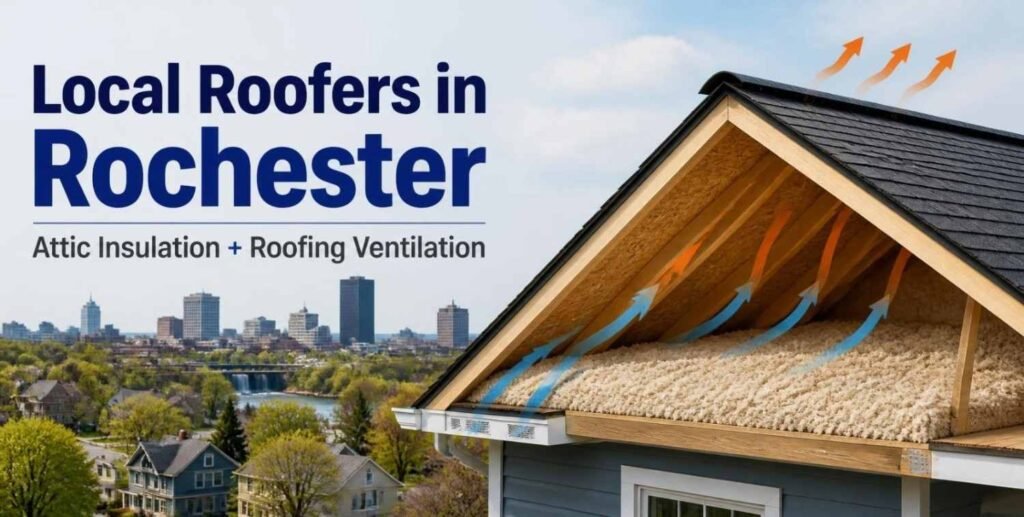
Roof ventilation is a system that provides continuous air flow through the attic. This is accomplished by the introduction of fresh outside air to the attic space, while letting warm and moist air rise and leave.
Generally, a well-ventilated roof system has two major components:
Intake Vents
Typically, intake vents are placed on the roof’s eaves or soffits. These vents allow cooler outside air to flow into the attic.
Exhaust Vents
Exhaust vents are normally placed close to the ridge of the roof. These will allow heat and humidity to vent from under the roof.
These vents, in combination, provide a balanced ventilation system to maintain the temperature and moisture of the attic.
Why Roof Ventilation Is Important in Rochester NY
Rochester has a variety of weather conditions year-round. Roofing systems are subjected to a lot of stress during these seasonal changes.
Winter Snow and Ice
It is typical to see a lot of snow in the Rochester area. One of the most serious winter roofing hazards is ice dams and improper attic ventilation can be a factor.
Summer Heat
In the summer, temperatures in the attic can reach over 150 degrees Fahrenheit. This can damage roofing materials and raise cooling bills in the absence of ventilation.
High Humidity Levels
Excessive moisture in an attic can result in mold, rot, and damage to insulation.
All of these concerns can be addressed with proper roof ventilation Rochester NY systems.
Preventing Ice Dams
The biggest advantage of roof ventilation is the prevention of ice dams.
How Ice Dams Form
Ice dams form when heat rises to the roof surface and melts the ice. The melting snow flows towards the cooler roof edges on the upper parts of the roof.
When the melted snow refreezes at the eaves, ice accumulates and creates a barrier.
When more snow melts, water is trapped behind the ice dam and may seep under shingles.
Potential Damage from Ice Dams
Ice dams may cause:
- Roof leaks
- Damaged insulation
- Ceiling stains
- Mold growth
- Structural deterioration
- Gutter damage
With proper air exchange, inside and outside air temperatures in the attic should be similar, which will help to decrease the melting of snow and the occurrence of ice dams.
Extending Roof Lifespan
Materials used to make roofs are meant to withstand the stresses of harsh weather, but too much heat and moisture will significantly reduce their lifespan.
Heat Damage
Poorly ventilated attics in summer will retain heat inside the roof deck.
This excessive heat can:
- Accelerate shingle aging
- Cause asphalt shingles to curl
- Damage roofing adhesives
- Reduce overall roof performance
Moisture Damage
The water may cause a roof to deteriorate over time if it is trapped.
Common issues include:
- Wood rot
- Deck deterioration
- Corrosion of metal parts
- Mold development
Good ventilation of a roofing system will keep roofing materials in good condition and enhance their service life.
Improving Energy Efficiency
A lot of homeowners are taken aback at the fact that the attic air flow has an impact on the energy cost.
Reduced Cooling Costs
The attic may get very hot in the summer.
Without ventilation:
- Heat transfers into living spaces
- Air conditioning systems work harder
- Utility bills increase
Good ventilation will eliminate excess heat and will help to decrease the cooling load on HVAC systems.
Better Indoor Comfort
Even distribution of air allows for more even heating and cooling inside the house.
This makes for greater comfort and energy efficiency.
Controlling Moisture Buildup
Any house will face the problem of moisture as one of the major threats.
Activities such as:
- Cooking
- Showering
- Laundry
- Dishwashing
Create water vapor that rises into attic areas.
If proper ventilation is not provided, moisture will build up, making it possible for mold to grow.
Risks of Excess Moisture
Excess moisture can result in:
- Mold and mildew
- Damaged insulation
- Structural wood decay
- Poor indoor air quality
- Higher maintenance costs
roof ventilation Rochester NY systems have the capacity to continuously remove moisture before it poses a problem.
Protecting Attic Insulation
Insulation is an important aspect of energy efficiency.
But moisture can have a significant effect on reducing insulation effectiveness.
Wet insulation:
- Loses thermal performance
- Compresses over time
- Encourages mold growth
- Requires replacement sooner
Providing proper ventilation will help to keep the insulation dry and working.
Common Types of Roof Ventilation Systems
There are a number of ventilation choices for Rochester homes.
Ridge Vents
A ridge vent is a vent that runs along the top of the roof.
Benefits include:
- Continuous airflow
- Low visibility
- Energy efficiency
- Effective attic ventilation
Ridge vents are one of the best roofing solutions for residential buildings, in the opinion of many roofing professionals.
Soffit Vents
Soffit vents are used to draw air in underneath the roof overhangs.
Advantages include:
- Improved air circulation
- Reduced attic temperatures
- Balanced ventilation systems
Ridge vents are commonly used in combination with soffit vents for the best performance.
Gable Vents
Gable vents are fitted on the outside walls at the peaks of the roof.
Benefits include:
- Additional ventilation
- Simple installation
- Improved airflow
Older homes are frequently the places where they are situated.
Roof Louvers
Roof louvers are box-type vents that sit on the roof’s surface.
They let warm air from the attic out and can be utilized when ridge vents cannot be used.
Powered Attic Ventilators
Powered ventilators increase the amount of air flowing through the use of electric or solar-powered fans.
Advantages include:
- Enhanced ventilation
- Improved heat removal
- Effective performance in larger attics
They are, in general, more maintenance-oriented than passive systems, however.
Signs Your Home May Have Poor Roof Ventilation
There are a number of telltale signs that could be caused by poor attic ventilation.
Excessive Attic Heat
If your attic is very hot in the summer, it could be that the ventilation isn’t good enough.
Ice Dam Formation
If ice dams keep returning, it may indicate ventilation issues.
Mold Growth
If there is mould visible in the attic, it can be a sign of moisture buildup.
High Energy Bills
Not ventilating a poorly designed attic can lead to increased cooling expenses.
Curling Shingles
With heat build-up, it can lead to a weaker shingle.
Condensation
Poorly ventilated roofs can be a source of moisture buildup on rafters or roof decking.
If homeowners begin to see these signs, it may be a wise idea to look into having their roof inspected by a professional.
Importance of Professional Roof Inspections
Sometimes, breathing problems are not apparent.
Professional rooftop roofing contractors can assess:
- Intake vent performance
- Exhaust vent functionality
- Airflow balance
- Moisture levels
- Insulation conditions
Inspections help identify potential problems before they result in expensive repairs.
How Rochester Weather Impacts Roof Ventilation
Ventilation is especially important in the Rochester area because of the unique climatic conditions.
Lake-Effect Snow
When the weather is cold and snowy, the possibility of ice damming increases.
Freeze-Thaw Cycles
Poor ventilation can cause roofing issues, which can be exacerbated by repeated freezing and thawing.
Humid Summers
Moisture problems occur in attic areas due to warm, moist air.
Seasonal Temperature Swings
Fast temperature shifts induce extra stresses in roofing materials.
Roofing systems can adapt to these changes with proper ventilation.
Roof Ventilation and New Roof Installations
Homeowners should consider their existing roof ventilation when replacing their roofs.
There are many roofing professionals who advocate for improving ventilation as part of roof replacement.
Benefits include:
- Improved roof performance
- Extended material lifespan
- Better energy efficiency
- Reduced moisture risks
Solving the problem of ventilation in the installation is relatively less expensive than fixing it after installation.
Long-Term Cost Savings
Spending money on good ventilation can save money in the long-term.
Potential savings include:
- Lower energy bills
- Fewer roof repairs
- Lower remediation expenses for molds
- Longer roof lifespan
- Improved insulation performance
These advantages can usually outweigh the up-front expense required for ventilation upgrades.
Choosing the Right Roof Ventilation Rochester NY Solution
Each house will have different ventilation requirements.
Some things to take into account are:
- Roof size
- Attic design
- Existing ventilation
- Climate exposure
- Roofing materials
A roofing expert will be able to tell you the best way to ventilate the home.
Additional Benefits of Proper Roof Ventilation
When it comes to the performance of your roof, many homeowners think of shingles, gutters, and insulation, but they don’t overlook ventilation. The right attic ventilation promotes the rest of the house’s health. It assists in structural integrity to prevent moisture-related problems, causing wooden framing, roof decking, and support beams to become weak over time.
Another benefit of the correct roof ventilation Rochester NY systems is enhanced indoor air quality. The extra water in an attic can cause mold and mildew to grow. The mold spores can eventually spread throughout the house and impact the air quality, and may give off unpleasant odors. Ventilation promotes more comfortable living for occupants by maintaining a consistent air flow.
Roof ventilation can also be used to maintain roofing warranties. Most roof manufacturers stipulate that good attic ventilation is a condition of the warranty. Poor ventilation may lead to a premature failure of a roof, which could restrict or exclude the warranty. Good ventilation ensures the safety of the roof and the homeowner’s investment.
Moreover, balanced attic ventilation helps to maintain uniform roof temperatures. This temperature stability decreases the chances of snow melting and refreezing in some locations in winter, one of the major contributing factors to ice dams. In the summer, ventilation decreases the accumulation of heat, which can radiate to living areas and stress cooling systems.
Ventilation is also important when considering attic storage or renovating the attic. Sometimes, extra insulation, stored items, or remodeling projects can impede airflow if not planned properly. It is important to keep ventilation passages clear to keep the system running.
Roofing technology is constantly advancing and today’s ventilation systems are more efficient and energy-saving. Whether you’re looking for new vent design, solar-powered attic fans, or enhanced airflow solutions, these options offer homeowners more than ever before. Today’s investment in the right ventilation can lead to reduced roofing problems tomorrow, while at the same time increasing the property value, comfort, and efficiency.
Final Thoughts
Roof venting Rochester NY, installation is extremely important. Ventilation keeps ice dams at bay, minimizes moisture, lowers energy bills, saves insulation, and prolongs the roof’s life.
With Rochester’s rigorous climate: heavy snow, humid summer heat, and freeze-thaw cycles, having proper attic ventilation is key to a healthy and efficient home. Homeowners can ensure long-term protection of their roofing investment from costly repairs by investing in a balanced ventilation system and conducting regular roof inspections.
Roof ventilation will always be one of the best investments you will be able to make in the performance and value of your property, no matter if you are constructing a brand new home, replacing an old roof, or solving moisture problems in your attic.
Frequently Asked Questions (FAQs)
1. Why is roof ventilation important in Rochester NY?
Proper roof ventilation helps prevent ice dams, moisture buildup, mold growth, and excessive attic heat. It also improves energy efficiency and extends the lifespan of roofing materials.
2. What are the signs of poor roof ventilation?
Common signs include high energy bills, attic condensation, mold growth, curling shingles, excessive attic heat, ice dams, and moisture damage to insulation or roof decking.
3. Can roof ventilation help lower energy costs?
Yes. Proper ventilation removes excess attic heat during summer, reducing the workload on air conditioning systems and helping homeowners save on cooling expenses.
4. How does roof ventilation prevent ice dams?
Ventilation keeps attic temperatures closer to outdoor conditions, reducing snow melt on the roof and minimizing the formation of damaging ice dams along roof edges.
5. What types of roof vents are commonly used?
Popular options include ridge vents, soffit vents, gable vents, roof louvers, turbine vents, and powered attic ventilators designed to improve airflow.
6. How often should roof ventilation be inspected?
Roof ventilation should be inspected at least once a year, preferably during a professional roofing inspection, to ensure vents remain unobstructed and functioning properly.
7. Can poor ventilation damage roof shingles?
Yes. Excessive attic heat can accelerate shingle aging, cause curling, weaken adhesives, and shorten the overall lifespan of roofing materials significantly.
8. Does ventilation help prevent mold growth?
Proper ventilation removes moisture from attic spaces, reducing the conditions that allow mold and mildew to develop on wood, insulation, and other surfaces.
9. Should ventilation be upgraded during roof replacement?
Yes. Roof replacement is an ideal time to evaluate and upgrade attic ventilation systems to improve performance, efficiency, and long-term roof durability.
10. How do I know if my home has enough roof ventilation?
A professional roofing contractor can assess airflow balance, attic temperatures, moisture levels, and vent placement to determine whether your ventilation system is adequate.