

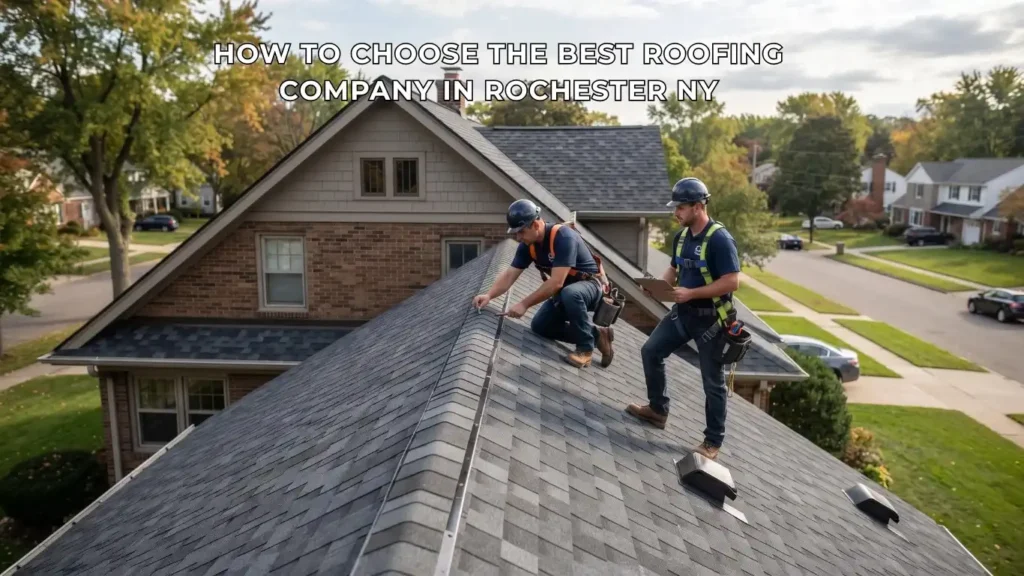
The blog explains how to choose the Best Roofing Company in Rochester NY. Roofs don’t do well in Rochester. Heavy lake-effect snowfall, ice dams, freeze-thaw cycles and even the occasional wind storm rolling off Lake Erie make a roof in Western New York’s hard work than almost any other part of the country. That’s because not only does the contractor you use count, but so do the materials that they use. The best roofing company Rochester NY is not only one that offers you the best prices, but one that considers your concerns about the weather, is properly licensed and insured, and is a company that will be available for years to come.
Whether it’s a roof that has been damaged by a storm, a complete roof replacement, or just a professional roof inspection to get ready for winter, this list will help you know what to expect and make confident hiring decisions.
Why Rochester Homeowners Need a Local Roofing Specialist
Not every roofing contractor is the same, particularly when it comes to a region such as Rochester. It simply won’t be the same hands-on experience for a company based in a milder climate with:
- Ice dam formation and prevention at eaves and valleys.
- The quantity of snow can be calculated for flat and low-slope roofs.
- Properly ventilated systems that keep attic condensation out in the cold winters.
- The lake is located within the wind zone and these shingles will be installed with wind resistance in mind.
- Erie County and the City of Rochester have local building codes specific to them.
If you are looking for the best roofing company Rochester NY you should seek out a company that has had the experience of actually having to deal with a Rochester winter, not one that just reads about it in a roofing training manual. Local experience means fewer callbacks, the right materials and roofs that perform when the snow begins to fall.
Step 1: Verify Licensing, Insurance, and Local Credentials
Prior to considering pricing, make sure a roofing company can legally access your home and will be covered if something goes wrong.
Check for Proper Licensing
While a roofing contractor does not need a state license for roofing in New York State, many local municipalities in Erie County do require their contractors to be registered locally. Request the business registration number from any prospective contractor and verify with the city or town in which you live.
Confirm Insurance Coverage
A good roofing company will have:
- General Liability Insurance for property damage
- Workers’ compensation insurance provides protection when a worker is injured on your premises
Always don’t miss this one out. When a roofing crew is not insured and one of their members is injured on your roof, you could be liable for their injuries. Do not accept a photocopy of a certificate of insurance; just get it directly from the insurance company.
Look for Manufacturer Certifications
The major manufacturers of shingles and roofing products (GAF, Owens Corning, CertainTeed) have certification programs available for contractors that adhere to installation requirements and install a minimum number of shingles. For long-term projects such as roof replacement, a certified installer can open up better manufacturer warranties, which can be significant when you’re looking for the best roofing company Rochester NY.
Step 2: Research Reputation and Track Record
After verifying the fundamentals, the next step is to learn about the business’s performance on the ground.
Read Reviews Across Multiple Platforms
Avoid using one review site. See Google Business Profile, Better Business Bureau, Yelp and Facebook. Look for:
- The volume and quality of reviews over time (consistency)
- The company’s reaction to negative feedbacks
- Specific mentions of Rochester neighborhoods or projects
- Complaints about missed deadlines, cleanup, or communication
Some of the five-star reviews posted in the same week may be a warning sign of fake reviews. A continuous flow of specific, detailed reviews over months or years is a much stronger signal.
Ask for Local References
A reputable roofing company should be able to give you addresses or contacts of recent projects in your neighborhood, usually within your own neighborhood or in an adjacent suburb, such as Amherst, Cheektowaga, West Seneca, or Tonawanda. There is nothing like seeing a finished project with a first-hand glance.
Check How Long They’ve Been in Business
Roofing jobs are physically exhausting, weather-related work and not all businesses make it in the first couple of years. A contractor who’s been around for 10 years or more, with a long history of continuous operation in Rochester, has survived more than a few storms, both real and metaphorical, and is no fly-by-night. This is a big deal for warranties: If a company folds two years after installing your system, they are not going to be able to perform a 25-year warranty.
Step 3: Compare Written Estimates Carefully
Avoid roofers who only provide a verbal quote or a number that is written on a business card. A detailed written estimate is a safeguard for you and the contractor.
What a Quality Estimate Should Include
- Full Scope of Work (Tear-off, Deck Repair, Underlayment, Flashing, Ventilation & Shingles)
- The specific brands and product lines of materials.
- Estimated time frame, weather conditions included
- Payment terms and acceptable forms of payment.
- Warranty for materials and labor (including scope of coverage and duration)
- The cleanup and debris removal process is described below:
- Permit responsibilities
Get at least three quotes
The cost of a full roof replacement in Rochester can vary greatly depending on the size of the roof, the pitch angle, what material is used for the roof and any underlying deck repairs that may be needed. The idea is to get three quotes so you have a realistic idea of what they’re going to charge you and can catch the underquotes as well as the overquotes, which tend to be based on the assumption that you won’t shop around.
Be Wary of Storm Chasers
Out-of-town crews after major hail or wind repairs sometimes canvas Rochester neighborhoods, offering quick and easy repairs. Many of these “storm chasers” tend to disappear before warranty problems become apparent. The best roofing company Rochester NY will have a permanent local address and phone number, but not a magnetic sign on a pick-up truck.
Step 4: Ask About Materials and Roofing Systems
When choosing materials, it’s important to remember that Rochester’s climate is not an aesthetic consideration.
Architectural vs. 3-Tab Shingles
Dimensional shingles, also known as architectural shingles, are heavier, sturdier and better able to withstand wind in the Western New York climate than 3-tab shingles. The job should be explained to the customer by the contractor in such a manner that they understand the compromises being made, instead of just trying to sell them the cheaper option.
Ice and Water Shield
Since ice dams are a frequent problem in Rochester, inquire to see if the contractor provides ice and water shield membrane at roof eaves, valleys and roof penetrations. A feature that sets apart the roofing pros from the amateurs is this self-adhering membrane that keeps water from backing up under shingles when ice dams occur.
Attic Ventilation
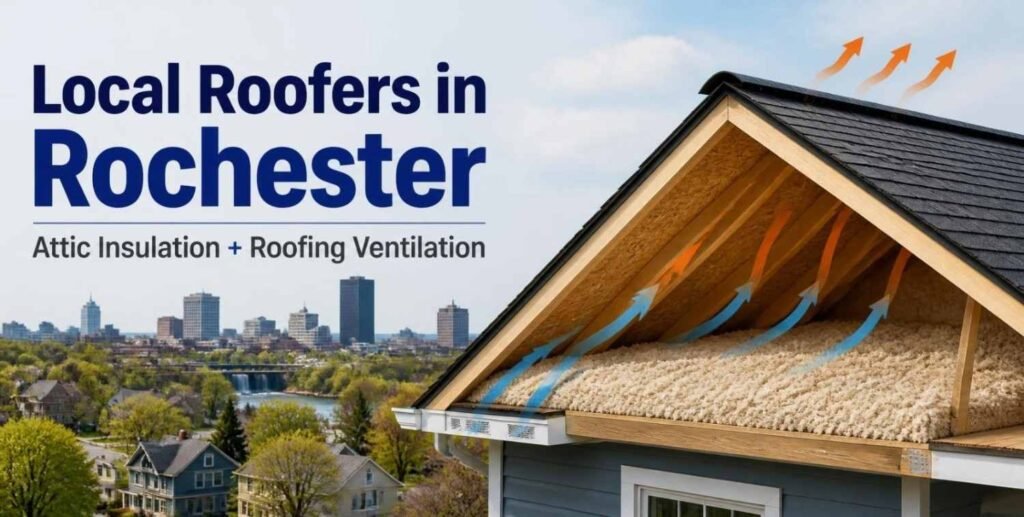
Heat and moisture can cause ice dams and shorten the life of shingles, so proper intake and exhaust ventilation will prevent these. A good contractor won’t just install new roofing shingles over an underlying issue that will likely happen again and again.
Metal and Flat Roofing Options
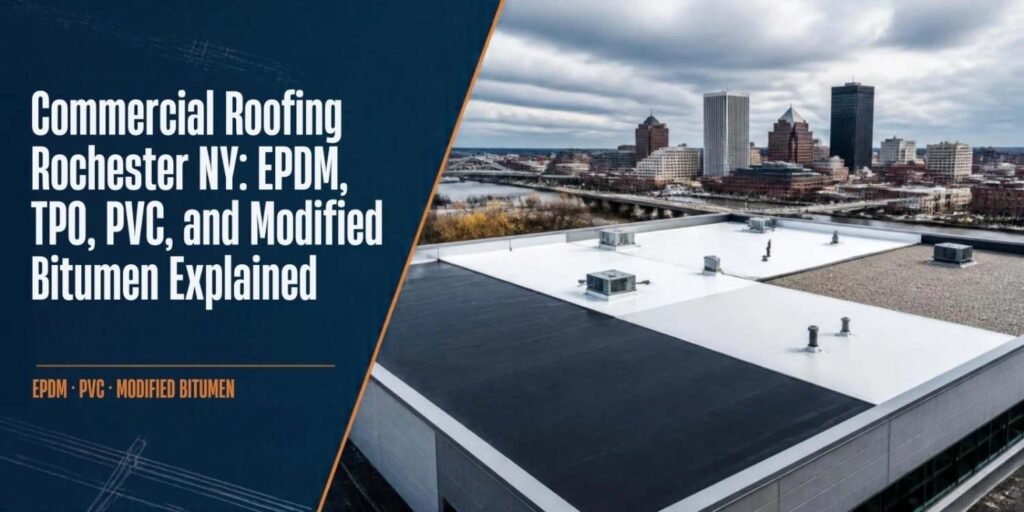
Many Rochester homes have flat or low-slope roofing sections, especially older homes that have been expanded, garages, and porches. Inquire if the company has experience using EPDM rubber, TPO or standing seam metal systems, as well as asphalt shingles.
Step 5: Evaluate Communication and Professionalism
The way a company communicates in the estimation phase is a good sign of how they will communicate during the project.
Pay attention to:
- Response time to your initial inquiry
- A clear explanation, particularly in terms of technical issues.
- Punctuality for planned inspections or estimates
- Empathy with the client’s problems and concerns
- A project manager or point of contact during the project.
When you’re in the middle of a roofing project, it’s bound to be noisy, messy, and disruptive. A business that has a clear communication policy regarding schedules, weather delays and daily cleanup will make the whole process a lot less stressful.
Step 6: Understand the Warranty Structure
Roofing warranties can be divided into two categories and knowing both is important before you sign a contract.
Manufacturer Warranty
This includes problems with the roofing materials. Some manufacturers may offer different coverage lengths and terms from other manufacturers, and the length of the warranty may also differ based on the certification level of the installing contractor, which can also provide extended and non-prorated warranties.
Workmanship Warranty
This is offered directly by the roofing company and will include any installation mistakes, including faulty nailing patterns or flashing. Ask specifically:
- What is the period of the workmanship warranty?
- Can it be passed on when you pass away?
- What does waive the warranty?
The contractor who is confident in their work will provide a workmanship warranty of at least five years, and many reputable contractors will provide a warranty of ten years or more.
Step 7: Ask About the Insurance Claims Process
When your roof’s damaged from storms, the roofing company you choose can ensure a much smoother insurance claims process.
Seek out a company that will:
- Do a comprehensive inspection and take pictures of damage.
- If necessary, consult with your insurance adjuster at the location.
- Include a comprehensive scope of work to support the claim – this should be in-depth and match what you are claiming
- Describe the difference between actual cash value vs replacement cost coverage.
Any contractor who insists you sign a contract before the insurance adjuster has evaluated the damage or demands a fixed settlement amount is not to be trusted, and is not working with the claims process, but against it.
Step 8: Ask What Happens During the Actual Roof Replacement
Knowing what to expect on a day-to-day basis can help you have a better idea of what to expect, and you’ll have a few more questions to ask when you’re shopping around for contractors.
Property Protection Measures
Your landscaping, siding, windows and outdoor fixtures should be protected by a professional crew before any tear-off. Specifically ask if the company has tarps to collect debris, plywood to guard the driveway from any damage by dumpster or dropped materials and magnetic nail sweepers to remove nails from the yard and driveway after the work is done. This is one aspect homeowners are not always conscious of – any roofing nails that fall to the ground in a driveway or lawn can puncture tires and/or bare feet weeks after the crew has departed.
Deck Inspection and Repair
After shingles are removed, the roof deck should be checked for rot, soft spots, or water damage (the plywood or OSB siding underneath). Inquire in advance what the company considers standard for deck repair: does it come in with the base estimate or will they charge an additional fee if issues are discovered? If your deck shows damage, a reputable contractor will take photographs of the damage first to use for the repair before charging you for it.
Daily Cleanup and Job-Site Safety
There is a lot of debris that can be created from roofing. If you have children, pets or vehicles that must have access to your property during the construction, ask if the crew will clean up during the day or at the end of the job. You should also inquire about how the company will secure the job site overnight, particularly when it takes more than a day to complete the project.
Final Walkthrough
Do a final inspection before the crew departs. A good contractor will show you around the property, tell you what he’s done, make sure everything is cleaned up, and answer any questions before requesting payment.
Common Roofing Terms Worth Knowing
Once you familiarize yourself with a couple of basic terms, you will be able to follow along with estimates and will not get confused when comparing bids from different companies.
- Underlayment: A waterproofing material placed under the shingles for extra protection against water.
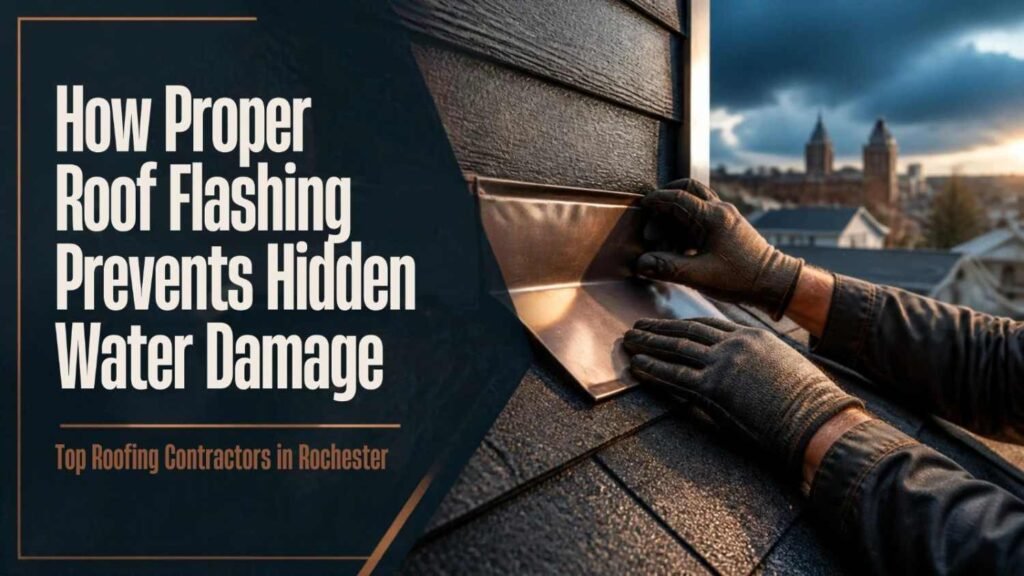
- Flashing: Thin metal that is placed around chimneys, vents, skylights, and roof valleys to keep water away from weak points.
- Drip edge: A metal piece located on the outside of the roof at the edge that guides the water to the gutter instead of behind fascia boards.
- Soffits and ridge vents: These venting elements keep air flowing through the attic space, minimizing moisture accumulation and risk of ice dams.
- Square: A unit of measurement for the roof area equal to 100 square feet, used in estimates and material orders.
Contractors who spend time discussing the terms with you during the estimate process, and don’t simply use jargon to get you to sign on the dotted line, are likely to be clearer to work with through the project.
Final Thoughts
Finding the best roofing company Rochester NY comes down to doing a bit of homework before a single shingle gets replaced. Verify licensing and insurance, dig into genuine local reviews, compare detailed written estimates from at least three contractors, and ask pointed questions about materials, ventilation, and warranty coverage. A roofing company that welcomes these questions and answers them clearly is almost always the one that will still be around and still honor its warranty a decade from now.
This is not a decision that can be made in haste, as Rochester winters put a strain on the roofing system. Do your due diligence and you will have a roof that will stand up to all of Lake Erie’s elements.
Frequently Asked Questions
1. How much does a new roof cost in Rochester, NY?
The prices are different depending on the roof size, roof pitch, roof material and the level of deck repair required. The best way to know what a realistic price for your home is like is to have several written estimates.
2. How long does a roof replacement typically take in Rochester?
The average length of time it takes to replace a roof on a residence is one to three days, but there may be delays due to the weather conditions, especially in Rochester during the snowier months.
3. What is the best time of year to replace a roof in Rochester?
Roofing projects typically only work during the late spring to early fall, when the weather is most stable, but many contractors are available during the year when the weather permits.
4. Do I need a permit to replace my roof in Rochester, NY?
Permit requirements exist for the replacement of roofs in many municipalities in Erie County. A good contractor will take care of the permitting process or tell you what you have to do.
5. How do I know if my roof has storm damage?
The symptoms are: missing or curling shingles, granules in gutters, dented flashing or vents, and water stains in interior ceilings. A professional inspection can determine the level of damage.
6. What’s the difference between a manufacturer warranty and a workmanship warranty?
A manufacturer’s warranty covers defects in the material and a workmanship warranty covers any installation mistakes. They’re essential and you should check them out prior to going into a deal.
7. Can I stay in my home during a roof replacement?
Yes, most homeowners stay in their homes during a roof replacement. Be alert for noise and vibration and take measures to safeguard items in the attic and upper floors.
8. How often should I have my roof inspected?
For most roofing professionals, a roof inspection should be performed once a year, preferably in the fall before winter storms and after a large storm.
9. What roofing materials hold up best in Rochester’s climate?
Architectural asphalt shingles rated for high wind performance and coupled with an adequate ice and water shield and adequate attic ventilation, are likely to hold up well in Rochester’s snow, ice and wind.
10. How do I verify a roofing contractor’s insurance?
Ask your contractor’s insurance company to send you a certificate of insurance, not the contractor’s insurance certificate, and a valid policy must be in effect.