

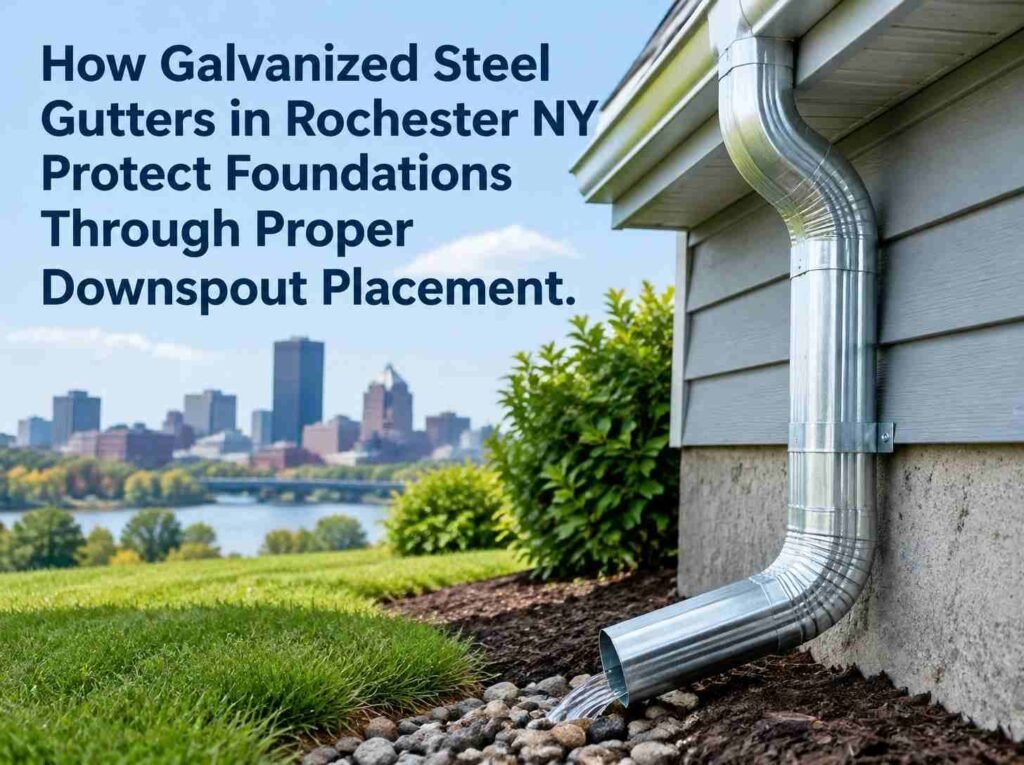
How Galvanized Steel Gutters in Rochester NY Protect Foundations Through Proper Downspout Placement is an important consideration for homeowners who want to manage rainwater effectively and reduce the risk of foundation problems. Rainwater falling on a roof travels to gutters, not just to collect water. They are part of a drainage system that provides a way to move water away from the building, which will help reduce any unnecessary water around the foundation. But even if gutters are properly installed, they cannot offer sufficient protection if downspouts are located too near the home.
Seasonal rain and snow fall, freezing temperatures, and fluctuating weather in Rochester NY. Because of these factors, it is particularly significant to ensure proper gutter drainage. Excessive runoff around the foundation can lead to foundation moisture, erosion, and soil saturation, among other drainage problems. While galvanized steel gutters are a sturdy solution for roof runoff management, they will not function properly unless they are installed correctly, the downspouts are appropriate for the location and it has an adequate drainage path.
Homeowners can benefit from learning how gutters and downspouts work together to make better decisions when making home exterior drainage choices. This guide will describe how galvanized steel gutters in Rochester NY help to protect foundations by positioning downspouts, the factors to consider during installation, and some drainage issues to avoid.
Understanding the Connection Between Gutters and Foundation Protection
A roof collects a considerable amount of rainwater during a storm. If the gutter system is not effective, water will spill over the sides of the roof and hit near the building. Repeated exposure to water over time can impact the soil that encircles the foundation.
This is gathered by gutters and funneled to specific downspout points. The water is then directed from the roof towards a proper drainage point through downspouts.
This process will aid in regulating water infiltration into the ground around the property.
When the drainage system works correctly, it can help:
- Avoid excessive watering around foundation walls.
- Minimize soil erosion in the area surrounding the building.
- Minimize excess water buildup.
- Protect landscaping around the house.
- Avoid allowing water to puddle up near the foundation again.
- Improve drainage in the event of heavy rain.
But having gutters doesn’t guarantee a dry basement or stop all basement issues. Other factors such as ground slope, soil conditions, foundation building methods and underground drainage systems also affect the way water flows around a property.
Why Galvanized Steel Gutters Are a Suitable Option for Rochester Homes
One of the most important aspects of installing gutters is the material used. In order to withstand regular rainfall, seasonal changes, and the physical challenges of roof water harvesting, homeowners require a system that can manage these factors.
Galvanized gutters are steel gutters coated with zinc. This coating helps to protect from corrosion and exposure to the environment as well.
There are several features to consider for galvanized steel.
Strength and durability: The steel structure is capable of carrying normal rainwater flow and accumulation of debris. Gutters that are properly supported can also handle the changes of the seasons.
Corrosion resistance: The zinc coating protects the steel from corrosion. But scratches, spoiled coatings, standing water, and inadequate maintenance will, over time lead to corrosion.
Structural stability: Galvanized steel is relatively rigid, which can help gutters maintain their shape when properly installed and supported.
Compatibility with different properties: These gutters can work with various architectural styles, including traditional residential homes and larger buildings.
Durability: When properly installed and maintained, galvanized steel gutters can offer long-lasting rainwater collection, potentially for many years.
Homeowners should keep in mind that galvanized steel does require maintenance. Periodic inspections are required to detect damage to the coating, loss of connections, corrosion, and other emerging problems.
How Downspout Placement Influences Foundation Drainage
One of the most essential parts of a good gutter drainage system is downspouts. They are designed to carry the water that has been collected off the roof to an appropriate discharge point.
The entire system may be less effective if placed improperly.
For example, a downspout that releases water immediately beside a foundation wall may cause repeated soil saturation. During heavy rainfall, the surrounding ground may struggle to absorb the additional water, particularly if the soil is already wet.
Over time, concentrated runoff can contribute to:
- Movement of soil near the foundation.
- Soil erosion in the area adjacent to the structure.
- Puddles and standing water around basement walls.
- Water seeping into pre-existing cracks in the foundation.
- Adjacent landscaping and walkways damage.
When installing gutters, it’s important to think about where the water will go after it exits the gutter system.
The location of the discharge should ensure that the discharge does not cause any issues to neighboring properties, public walkways or other structures while keeping runoff away from the foundation.
Specific location will be determined by the layout of the property, local grading and drainage, and applicable requirements.
Choosing the Right Locations for Downspouts
Installing downspouts should take into account the roof layout and the natural drainage of the property. Just setting them on easy corners will not guarantee that they will be as effective.
There are a number of factors to take into account when having a professional gutters installation assessment.
Roof Size and Water Collection
The more water that can be caught in a larger area of roof, the more water will be harvested. Heavy rain can cause gutters to overflow and may necessitate thoughtful placement of downspouts in these locations.
Downspouts should be sized and placed according to the roof size, gutter width, anticipated rainfall, and system capacity.
Foundation Distance
Water needs to be directed away from the foundation walls and away from the building by downspouts.
Other drainage measures such as extensions may be used to transport water further away. The distance should be determined based on the property and will need to be taken into account with the ground slope.
Ground Slope
An orientation of the surrounding ground affects the direction in which the discharged water runs.
Even with the downspout placed at a correct angle, water can be traveling back toward the house if the ground slopes toward the house.
Owners should evaluate slopes at points of discharge and make adjustments if conditions allow water to be returned to the structure.
Nearby Structures
Downspouts should not discharge water in areas where it can harm decks, walkways, driveways, neighboring property or landscaping.
The objective is to establish an artificial drainage course to divert the water away from the area, but not to pass it on to another area elsewhere.
Why Downspout Extensions Matter
A waterproof downspout that extends the water from the roof to the ground is capable of doing that, but that isn’t the end of the drainage.
If the water is discharged in too close proximity to the foundation, it can still pool around the building.
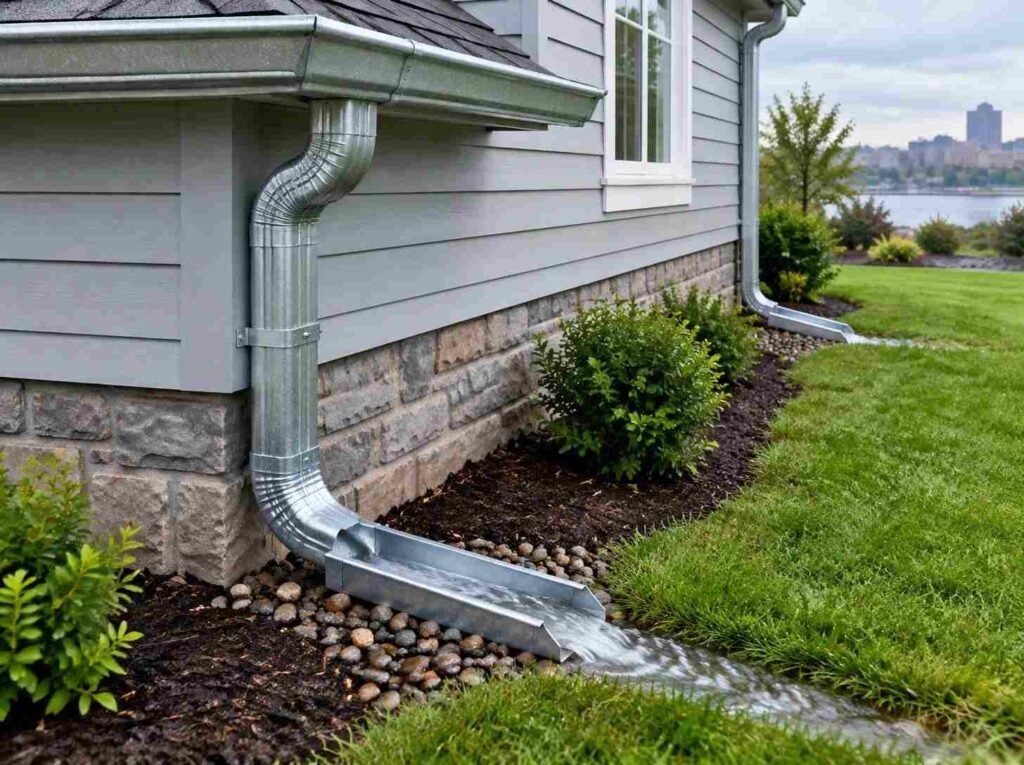
Extensions on the downspout can help mitigate this issue by directing runoff further from the foundation.
Common extensions are:
| Extension type | Purpose | Important consideration |
| Above-ground extension | Directs water away across the surface | Must remain positioned correctly |
| Flexible extension | Provides adjustable drainage direction | Can become displaced or damaged |
| Rigid extension | Creates a more stable discharge route | Requires suitable placement |
| Underground drainage pipe | Carries water below ground | Needs proper installation and an appropriate outlet |
| Splash block | Disperses water at the discharge point | May not provide enough separation on its own |
This will vary with the drainage of the property.
For example, an above-ground extension could be successful in areas with enough room and proper grading. An underground system may be considered if surface extensions are interfering with landscaping or regular outdoor activities.
Underground drainage should not, however, be connected to an inappropriate place. The discharge area needs to be planned so that the water does not flow back towards the house or create a problem elsewhere.
How Proper Gutter Slope Supports Effective Drainage
Although it matters where the downspout is located, gutters need to be positioned to take water to the downspout.
Water may stand in the gutter in some areas if the gutter is not installed with proper slope.
Areas of standing water may cause a number of issues:
- A rise in the weight load on gutter supports.
- Debris accumulation.
- Corrosion in damaged or exposed areas.
- Overflow during rainfall.
- Early degradation of interconnections.
Professional gutter installation will include an examination of the alignment and pitch of the gutters so that water flows to the point where it has to go.
The slope required will vary based on the design of gutters, gutter length, and installation specifications.
Another factor homeowners should take into account is the variations in the roof plane. A more complex roof layout, complicated design elements, or long roof edges might necessitate extra outlets or a more thoughtful drainage plan.
Water that catches in the gutters should be directed to the downspouts by a well-sloped gutter system.
Rochester Weather Makes Reliable Gutter Drainage Important
Rochester’s seasonal weather changes may also put more strain on home gutters.
Water flow in gutters and downspouts can be impacted by rainfall, snow, melting snow, and freezing temperatures.
In cooler times of year, rain will be able to flow into gutters in no time and show up any drainage issues. At times in the winter, snow can seep down the gutter system and freeze when it gets cold.
Snowfall can cause water to pool on the ground and create a ground-level risk of overflow.
The following seasonal conditions should be noted by the owners of the property.
Leaves, twigs, and other material may get trapped in gutters and clog downspouts in the fall.
Fall: Leaves, twigs, and other debris can collect inside gutters and block downspouts. Cleaning before winter helps maintain water flow.
Winter: Snow and ice can interfere with drainage. Homeowners should monitor visible ice accumulation and avoid unsafe attempts to remove it.
Spring: Melting snow and seasonal rainfall can reveal drainage problems that developed during winter.
Summer: Heavy rainstorms can expose undersized gutters, blocked outlets, or poorly positioned downspouts.
A routine of seasonal inspections allows homeowners to detect issues that are about to impact their property.
Common Downspout Placement Mistakes That Affect Foundations
A tough gutter system can have poor performance if the drainage outlets are not properly positioned.
Familiarizing yourself with some of the most common mistakes can make it easier for you to identify problems that you might need to have fixed by a professional.
Discharging Water Directly Beside the Foundation
A common issue is downspouts discharging water directly next to foundation walls.
Intermittent stormwater runoff can cause the surrounding soil to become saturated and expose the building to more moisture.
Better approach: Use appropriate extensions or drainage arrangements to direct water away from the foundation.
Directing Water Toward the Basement Window
A downspout that is close to a basement window can lead to window well pooling.
This can lead to a greater possibility of water finding its way into the basement, particularly if basement drainage is already restricted.
Better approach: Check window wells and direct runoff from them to a proper discharge spot.
Allowing Water to Flow Toward the Property
If there is a poor grade, it can cause the water discharged to flow back towards the house.
If a downspout extension is installed, the surrounding slope may not allow for proper drainage.
Better approach: Analyse the ground surface and fix any grading issues as far as possible.
Placing Outlets Near Walkways
Runoff on walkways or driveway surfaces can make them slippery. In freezing weather, this water can freeze.
Better approach: Select discharge locations that do not interfere with pedestrian access or vehicle movement.
Ignoring Blocked Downspouts
Water movement is limited by leaves, dirt and other debris. If one of the downspouts closes up, the water could back up in the gutter or leak out through the joints.
Better approach: Regularly inspect and clean downspouts, particularly in the fall and after severe storms.
How Gutter Installation Should Account for Roof Design
A gutter system should be tailored to the specific roof structure and not to an average gutter system for all properties.
The different roof designs have different water collection and distribution systems.
In other cases, runoff from more than one roof valley could flow into specific sections of the gutters. If the roof is larger in size, it may be necessary to have more outlets to control water collection.
When installing, it is important to consider:
- Total roof area.
- Roof pitch and drainage direction.
- Number of roof valleys.
- Gutter size and capacity.
- Downspout quantity and placement.
- Existing drainage conditions.
- Building height and accessibility.
Galvanized steel gutters should also be connected, fastened, and hung with the appropriate hangers, fasteners, joints, and connections.
The installation crew should verify that the gutter system can capture the runoff it is designed for and channel it towards the intended discharge.
Warning Signs That Your Gutter Drainage System Needs Attention
Drainage issues are not always apparent in the home until signs of damage are visible around the house.
But some clues suggest that the gutter and downspout system is not functioning well.
| Warning sign | Possible explanation |
| Water pooling beside the house | Downspout discharge or grading problems |
| Soil erosion near foundation walls | Concentrated roof runoff |
| Overflowing gutters | Blockages or insufficient drainage capacity |
| Water stains on exterior walls | Leaking gutter joints or overflow |
| Damp basement areas | Possible exterior drainage or foundation moisture issues |
| Sagging gutter sections | Loose supports or accumulated weight |
| Water collecting around window wells | Poorly directed runoff |
| Ice near downspout outlets | Drainage and freezing-related problems |
Not all these signs are a sign of the gutter system being the sole cause. Other causes include foundation problems, plumbing leaks, and groundwater.
A professional inspection will help to decide if gutters need repairs, downspouts need to be adjusted, grading will need to be improved, or more drainage will need to be added.
Conclusion
Homeowners can use Galvanized Steel Gutters in Rochester NY to help control the flow of water from their roofs and eliminate excess water around their homes. But the effectiveness of the system is not only dependent on the material of the gutter. Good drainage is the result of proper downspout location, helpful extensions, proper gutter slope and a clear downspout discharge path.
If downspout water flows near foundation walls, it can still impact the soil around the foundation. Improper grading, blocked outlets and inappropriate discharge points can lead to other drainage issues.
It is important for homeowners to review their roofing plan, check their current gutter connections and make sure that downspouts Rochester NY are directed to the correct areas. Regular maintenance also enables problems to be detected before they become more costly to rectify.
If you are noticing any of the following symptoms, you may want to get the system professionally checked overflowing gutters, water pooling around the foundation or frequent drainage problems. With proper planning, a properly installed gutter will help with the management of water and help to preserve the exterior and foundation of your home over time.
Frequently Asked Questions
1. How do galvanized steel gutters help protect foundations?
They collect roof runoff and direct water away from foundation walls, reducing soil saturation and erosion.
2. How far should downspouts extend from a foundation?
They should release water far enough away to prevent pooling near the house. The ideal distance depends on property grading and drainage conditions.
3. Why is downspout placement important for foundation drainage Rochester?
Proper placement prevents rainwater and melting snow from collecting around foundation walls.
4. Do galvanized steel gutters rust?
Yes, damaged zinc coatings and poor maintenance can eventually lead to rust.
5. Can gutter extensions prevent basement water problems?
They help direct runoff away from foundations but cannot solve every basement moisture issue.
6. How often should galvanized steel gutters be inspected?
Inspect them at least twice a year, preferably during spring and fall.
7. What causes water to overflow from gutters during heavy rain?
Common causes include clogged downspouts, debris, poor gutter slope, and insufficient capacity.
8. Are underground downspout drainage systems a good option?
Yes, when properly installed with a suitable outlet, they can direct water away without visible extensions.
9. What are the signs of poor downspout placement?
Water pooling near foundation walls, soil erosion, basement moisture, and water collecting around window wells can indicate drainage problems.
10. When should homeowners consider professional gutter installation?
Consider professional installation when replacing damaged gutters, experiencing recurring drainage problems, or planning a new gutter system.