

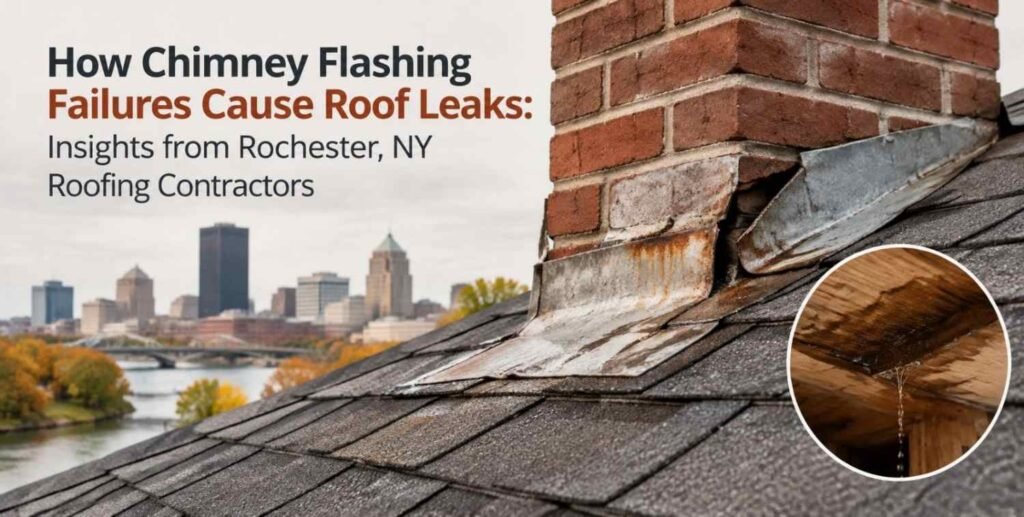
How Chimney Flashing Failures Cause Roof Leaks: Insights from Rochester, NY Roofing Contractors is an important topic for homeowners who want to protect their properties from water damage. There is an area of overlap in the roof, through which a chimney runs. This connection must be adequately protected from rainwater, melting snow and moisture entering the roofing system. The chimney flashing does that by sealing the opening between the chimney and the roofing materials. When the flashing is damaged, loose, corroded or improperly installed, however, water can penetrate and leak into the roof. These problems may be exacerbated by Rochester’s seasonal weather patterns such as heavy rain, snow, and a number of freezes and thaws. A chimney roof repair can help homeowners prevent more extensive roofing damage if they understand how chimney flashing works, the signs of early warning, and the proper time to call in a chimney roof repair specialist.
What Is Chimney Flashing and Why Is It Important?
The waterproofing system around the base of a chimney where it joins the roof is known as chimney flashing Rochester. Its primary function is to guide the water away from this weak point and keep moisture out of the roof structure.
Chimneys run through the roofing surface and compromise joints, which need extra protection. Shingles will not seal the chimney all the way around. These gaps can be plugged and rainwater directed away from the roof with flashing.
Most of the time, a good flashing system consists of several different parts:
- Step flashing: Small metal pieces attached to the side of the chimney and attached to the roof shingles.
- Counter flashing: Metal flashing attached to or embedded in the chimney masonry to cover the upper edges of the step flashing.
- Base flashing: The bottom part that helps to direct water away from the chimney connection.
- Cricket or saddle: A roof over broad chimneys that will divert water away from the chimney and not allow it to pool.
Their purpose is distinct for each component. If one part of the section is damaged or breaks away from the other parts of the roof assembly, water can penetrate the roof assembly.
How Chimney Flashing Problems Cause Roof Leaks
There are ways chimney flashing Rochester can become a problem that take time to occur. Although a small hole may let in a small amount of moisture the first time, ongoing rain and snow exposure can cause further damage.
Knowing some of the most frequent causes could help homeowners identify the reason for a leak in their roof around a chimney.
1. Loose or Separated Flashing
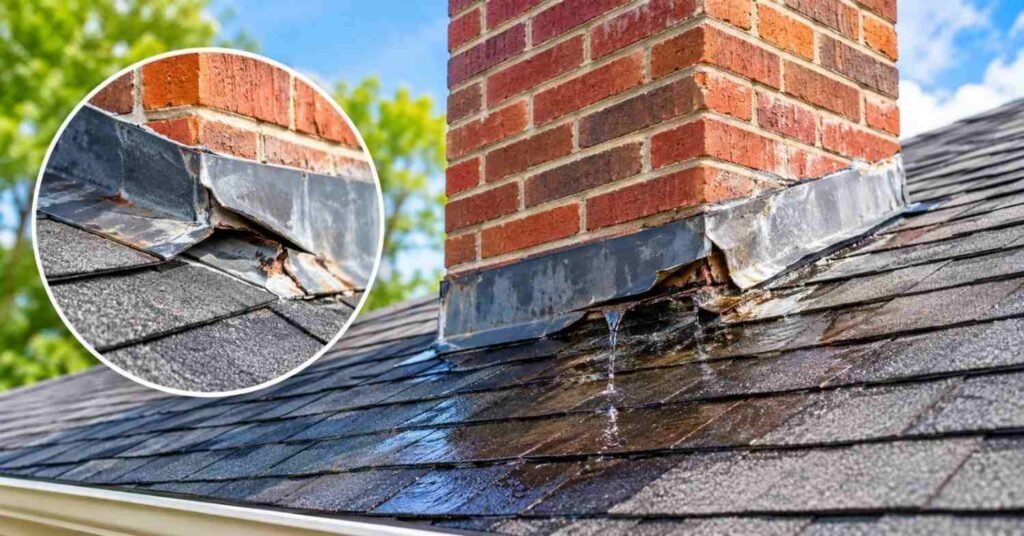
Over time, flashing can become loose due to weather exposure, building movement or improper installation. Small gaps can develop when the metal flashing is pulled away from the chimney or roofing surface.
These openings can allow rainwater to seep under the roofing shingles or into the roof structure. The leak could not be directly beside the chimney, as water may travel through roof decking, rafters, etc. before being visible.
A professional inspection can determine if the flashing has come loose and if the problem areas must be fixed or replaced.
2. Cracked or Deteriorated Sealant
Some chimney flashing Rochester systems are composed of sealant around joints and masonry connections to keep water out. But over time, the sealant may crack, shrink, become brittle, or peel away.
This can be caused by changes in temperature. In cold weather, moisture can get in through a crack and freeze and expand. As ice melts, the gaps can widen, and more water can seep in.
The use of new sealant over a previous problem may only be short-term protection. A good repair will include checking and repairing the flashing and underlying connection.
3. Rust and Metal Corrosion
Metal flashing is constantly subjected to temperature variations, moisture, and the environment. However, some materials can corrode or rust over time, especially if the protective coating is damaged.
Over time, weathering can cause the flashing to corrode and become less effective, creating small holes or weak spots that can let water in. Covering up the damaged flashing with a surface repair may be more of a gamble if the damage is extensive.
When any sign of rust, torn metal edges, or leaking water around the chimney is noticed, homeowners should schedule an inspection.
4. Incorrect Flashing Installation
Another frequent chimney flashing failure is due to poor installation. If flashing is not properly installed with the shingles and chimney masonry, then water can flow through the exposed joints.
For example, step flashing must coordinate with roofing materials and counter flashing must cover the connection at the top. When not installed properly, water can flow beneath the flashing rather than safely down the roof.
Experienced Roofing Contractors in Rochester, NY can assess the installation and determine whether the system needs adjustment, partial replacement, or complete flashing repair.
5. Damaged Chimney Masonry
The chimney flashing relies on the stability of the connection between the chimney and the surrounding masonry. The connection can be weakened by cracked mortar joints, deteriorated bricks, or damaged surfaces on the chimney.
Water can seep in through cracks in the masonry above the metal flashing even though the flashing is in good condition. This can render identifying the source of a leak challenging.
A thorough examination is therefore required to take into account both the flashing and the chimney structure. Depending on the condition, homeowners may require not only roofing repair, but masonry repair as well.
Common Warning Signs of Chimney Flashing Problems
Chimney flashing issues are not always visible from the ground. Some problems first appear inside the home, while others can be identified through changes around the chimney.
Recognising these warning signs early can help homeowners arrange repairs before water damage becomes more extensive.
| Warning sign | What it may indicate |
| Water stains on ceilings near the chimney | Moisture entering through the chimney-roof connection |
| Damp attic insulation | Water travelling beneath the roofing materials |
| Peeling paint or damaged plaster | Repeated moisture exposure inside the home |
| Rusted or lifted metal flashing | Deterioration or separation of flashing components |
| Cracked mortar around the chimney | Damaged masonry that may allow water entry |
| Mould or musty smells in the attic | Ongoing moisture accumulation |
| Water dripping during rainfall | An active leak that requires investigation |
There are a number of potential causes for these symptoms. For instance, a ceiling stain near a chimney does not necessarily indicate that the flashing has failed. Openings like roof damage and chimney masonry issues can also allow water into a property.
A professional evaluation may be able to give a more precise determination of the actual source.
Why Chimney Flashing Problems Are Important in Rochester, NY
People who live in Rochester experience various climatic conditions during the year. Roofing materials and chimney flashing may be subjected to further stresses by rain, snow, ice, wind, and seasonal temperature changes.
Heavy Rainfall and Water Exposure
Heavy rains cause water to flow on the roof and around the chimney construction. Gaps or broken joints in flashing allow water to seep in at those spots.
A well-designed flashing system can aid in directing water away from the chimney connection. If it doesn’t work, even regular rain can cause roof leaks.
Snow Accumulation Around Chimneys
In low-slope roofing systems or where the chimney is an obstacle to the flow of snow and water, snow can accumulate around the chimney.
Melting snow may flow towards the impaired flashing joints as temperatures rise. When the waterproofing system does not work properly, water can seep under the roofing materials.
Freeze-Thaw Conditions
Winter weather in Rochester can result in multiple frosts and thaws. Water has the potential to freeze and expand in small cracks, exerting pressure on surrounding materials.
This can cause cracking of sealant, separation of flashing and decay of masonry over time. The situation is especially beneficial for regular roof inspections before and after winter.
Strong Winds and Storm Activity
Loose shingles can become airborne in strong winds, loose edges of flashing can be disturbed, and areas which were previously covered can be exposed. Wind-driven rain can also be directed towards openings where it would not directly fall to the ground.
Following an extreme storm event, homeowners should check for new water stains, roofing material that’s loose or hanging, and any noticeable changes in the area around the chimney.
How to Identify the Source of a Roof Leak Near a Chimney
Determining the cause of a chimney leak in a roof is often difficult as water does not necessarily run in a straight line. It can enter through the chimney and travel through roof decking before being spotted on a ceiling inside the home.
A structured inspection may help to focus the problem.
Inspect the Attic
When the attic can be accessed safely, homeowners may observe dampness in the insulation, water marks, mould or discolouration around the chimney structure.
The following indicators can be useful in determining the location of moisture intrusion. But sometimes the actual outside opening may not be seen in an attic inspection, especially if water has run along the inside surface.
Examine the Ceiling and Interior Walls
Leaky roof and walls, peeling paint, bubbling plaster, and moisture around the chimney are signs of a hidden moisture issue.
When the symptoms begin, it is a good idea for homeowners to know. A leak which is experienced during heavy rainfall for instance, may indicate a problem with the waterproofing on the outside of the building.
Check the Roof and Flashing
A professional roof inspection will be able to detect lifted flashing, cracked sealant, gaps around the chimney, rusting metal and damaged shingles.
Access to roofs can be hazardous and should be avoided during adverse weather conditions, such as wet, icy or windy weather. Climbing up on the roof to check for damage should be left to a technician.
Consider Other Possible Causes
Not all chimney leaks are caused by the flashing. Other factors may be responsible for this:
- Cracked chimney masonry.
- Damaged or missing roof shingles.
- Deteriorated chimney caps or crowns.
- Damaged roofing underlayment.
- Poorly installed roof penetrations.
- Ice-related damage around the chimney.
It is important to determine the right cause as fixing the wrong one will not halt the leak.
Chimney Flashing Repair Options
The type, location and severity of the damage will determine the appropriate repair. A minor problem can be fixed with a limited repair, and large problems may need a flashing system replacement.
| Type of problem | Possible repair approach |
| Small gaps around flashing joints | Repair the joint using suitable roofing materials and sealant |
| Loose flashing sections | Re-secure or reinstall affected flashing |
| Corroded or damaged metal | Replace the affected flashing components |
| Cracked chimney mortar | Repair deteriorated masonry joints |
| Incorrect flashing installation | Correct the installation and integrate the flashing properly |
| Extensive flashing deterioration | Replace the complete flashing system where necessary |
The repair should restore the connection between the chimney and the roof rather than simply cover visible openings.
When Is Flashing Replacement Necessary?
If the metal has significant corrosion or multiple sections have broken away from the original, or the installation was made incorrectly, it may need replacement.
If the flashing has been in place for a long time, it may not be able to be patched again and again to offer reliable protection. Replacing components can restore the roof to its ability to redirect water away from the chimney.
A roofing expert will be able to assess the roofing material and suggest the best repair method.
The Role of Professional Chimney Roof Repair
In order to fix chimney flashing, it is important to understand roofing materials, construction of chimneys and water flow. A fix that does not solve the issue can allow water to still enter the residence.
The most common professional chimney roof repair work consists of pinpointing the leak, determining the state of the flashing, and inspecting the roof and masonry around the chimney.
Accurate Leak Detection
The roofing professional can inspect the chimney connection and roofing materials in and around the chimney for possible entry points. This is crucial since visible water damage in the house could be a few feet from where the opening has occurred.
Correct Flashing Installation
When installed correctly, each component of a flashing will work with the chimney structure and roofing materials. The purpose of this is to push water away from the connection, but leave no gaps or exposed joints.
Assessment of Related Damage
More than the flashing was involved in a leak. The roof decking, insulation, shingles and interior materials might also require attention.
An inspection may indicate the need for further repairs before the roofing system is restored.
Long-Term Water Protection
The reason the flashing has failed should be taken care of with a well-planned repair. It can be as simple as replacing damaged metal or repairing masonry, fixing installation problems or making changes to water drainage around a chimney.
How Homeowners Can Help Prevent Chimney Flashing Leaks
While it’s true that all flashing materials will wear with the passage of time, frequent upkeep can help the homeowner notice issues before they cause serious water damage.
Schedule Regular Roof Inspections
During a roof inspection, the inspector can look for loose flashing or cracked sealant, damaged shingles and failing chimney masonry.
It’s important that homeowners schedule an inspection during these times after a severe storm and in advance of winter. Frequent professional evaluations may be warranted with older roofs.
Keep the Chimney Structure in Good Condition
Cracked mortar and damaged brick can permit water infiltration into the chimney structure and into the flashing connection.
Fixing any problems with the masonry in a timely manner can minimize exposure of moisture to the roof and surrounding area.
Address Small Leaks Early
If your ceiling has a slight stain or your attic is damp, don’t ignore it. A leaky seal, no matter how minor, will allow water to be able to get inside again and again, especially if it happens during rainy or snowy conditions.
Prompt investigation can help prevent damage to insulation, roof decking and interior finishes.
Avoid Temporary Repairs as a Permanent Solution
Sealing or painting over damaged flashing may be a temporary solution. But these techniques can’t solve the issue.
Temporary solutions should not be used as a substitute for a proper assessment and repair, particularly if flashing is corroded, not installed correctly, or structurally damaged.
Planning Chimney Flashing Maintenance Throughout the Year
A seasonal maintenance routine may be beneficial for Rochester homeowners to keep track of the condition of the chimney flashing and roof.
| Season | Recommended maintenance |
| Spring | Check for damage caused by winter ice, snow, and freezing temperatures |
| Summer | Arrange repairs and inspect flashing, sealant, and chimney masonry |
| Fall | Prepare the roof for colder weather and address visible gaps or loose materials |
| Winter | Monitor interior signs of leaks and arrange professional assessments when conditions allow |
Additionally, the age and condition of the roofing system should be taken into account. A roof that is newer and has good flashing may only be in need of routine monitoring, whereas an older roof might require more in-depth monitoring.
Seasonal maintenance alone will not prevent any leaks, but it can help detect potential issues before they get worse.
Conclusion
Chimney flashing is an important component in keeping the chimney and roof connected. If the flashing becomes loose, corroded, cracked, or improperly installed, water can enter the roofing system, causing leaks, damage to the insulation and deterioration of interior materials. The rainfall, snowfall, and freeze-thaw events at Rochester can add to these stressed areas.
Symptoms of trouble at home include stains on the ceiling, damp insulation inside the attic, rusted flashing, and broken chimney masonry. Once you have determined that there is moisture, finding the source is crucial, as there could be more than one cause of a chimney leak near the chimney. Professional assessments and appropriate repairs can help restore the roof’s water protection and minimize the threat of additional damage. Homeowners should consider the appropriate experience, inspection results, and repair suggestions from Roofing Contractors in Rochester, NY when comparing the different contractors.
Frequently Asked Questions
1. What is chimney flashing on a roof?
Chimney flashing is a waterproofing system installed where a chimney meets the roof. It directs rainwater away from the connection and helps prevent leaks.
2. What causes chimney flashing to fail?
Flashing can fail because of corrosion, loose metal sections, cracked sealant, poor installation, weather exposure, or movement in surrounding building materials.
3. How can I tell if chimney flashing is leaking?
Common signs include ceiling stains near the chimney, damp attic insulation, visible rust, damaged sealant, and water entering during rainfall.
4. Can damaged chimney flashing cause roof leaks Rochester NY?
Yes. Gaps or damaged sections can allow water beneath the shingles and into the roof structure, eventually causing interior leaks and moisture damage.
5. How much does chimney flashing repair cost in Rochester?
The cost depends on the type of flashing, extent of damage, roof accessibility, and whether chimney masonry or other roofing materials also need repairs. Request an inspection and written estimate.
6. Can chimney flashing be repaired without replacing it?
Minor problems may be repairable if the flashing remains structurally sound. Extensive corrosion, separation, or incorrect installation may require replacement.
7. How long does chimney flashing last?
Its lifespan depends on the metal material, installation quality, weather exposure, and maintenance. Regular inspections can help identify deterioration before leaks develop.
8. Does chimney flashing need to be inspected every year?
Annual roof inspections can help identify developing problems. Additional inspections may be useful after severe storms or when homeowners notice signs of water entry.
9. Can snow cause chimney flashing leaks in Rochester?
Yes. Melting snow can enter gaps around damaged flashing. Freeze-thaw cycles may also worsen existing cracks and separations in flashing or chimney masonry.
10. Is a chimney leak always caused by flashing?
No. Cracked masonry, damaged chimney crowns, missing shingles, and other roof openings can also cause leaks near a chimney. A proper inspection is needed to identify the source.