

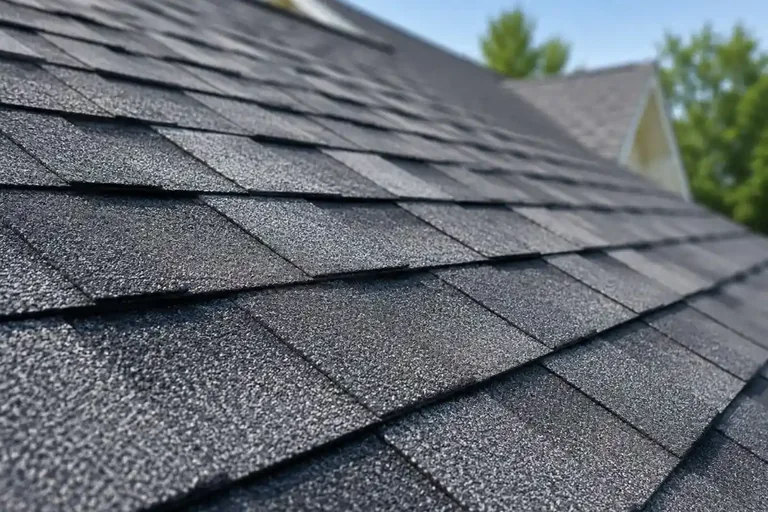
The Blog tells about Emergency Roofing Services in Rochester, NY: What to Do After Storm Damage. Rochester, NY, can be hit with serious storms at a moment’s notice, and homeowners can find themselves with a leaking roof, no shingles, fallen limbs, and a lot of damage to their home. Residential roofing systems are vulnerable to heavy rain, strong winds, hail, and winter storms. If damage has already been done, it’s important to act quickly to ensure that your home is safe and can be prevented from causing additional issues.
Professional emergency roofing Rochester, NY services help homeowners respond quickly after storms, minimize damage, and restore safety. Understanding what steps to take immediately after a storm can reduce repair costs, improve insurance claims, and protect your family from additional hazards.
This guide will cover how emergency roofing functions, the common causes of storm damage, safety measures, repairing options, insurance considerations, and selecting the right emergency roofing contractor in Rochester.
Why Storm Damage Is a Serious Roofing Emergency
Your roof is the first line of defense against the weather. After a storm damages the roof, water and moisture find their way into the house and have the potential to cause extensive damage.
Any roofing issue, no matter how minor, can quickly turn into a serious problem.
Damage to roofs can result from storms and lead to the following:
- Interior water leaks
- Mold and mildew growth
- Structural weakening
- Electrical hazards
- Insulation damage
- Ceiling collapse risks
Quick response following severe weather is critical.
Common Causes of Emergency Roof Damage in Rochester
Rochester is subject to a range of weather throughout the year, which can cause roofing emergencies.
High Winds
Roofs may lose shingles, and flashing can be blown off, causing a loss of roof integrity.
Heavy Rainstorms
Drips or leaks are often due to areas of weakness in aging roofs that are exposed to excess rain.
Hail Damage
The impact of hail breaks shingles and damages protective surfaces.
Snow and Ice
Excess weight and moisture intrusion from heavy snow buildup and ice dams.
Fallen Trees and Branches
Trees or limbs can blow over on a roof, causing major structural damage during a storm.
Signs you need emergency roofing services
There are parts of the storm damage that are immediately apparent and other problems that may not be so readily apparent.
Symptoms may include:
- Active roof leaks
- Water stains on ceilings or walls
- Missing shingles
- Sagging roof sections
- Visible holes or punctures
- Debris on the roof
- Granules are collecting in gutters
- Drafts or moisture in the attic
Should you observe any of these indicators following a rainfall, give a call to an emergency roofing Rochester, NY company right away.
What to Do Immediately After Storm Damage
Understanding what to do following the storm can benefit you and your insurance policy.
1. Prioritize Safety
Avoid walking on a hazardous roof during or after a storm. Roofs are extremely dangerous due to wet surfaces, structural instability, and electrical hazards.
Avoid:
- Walking under sagging ceilings
- Touching exposed wires
- Entering heavily damaged areas
If there is extensive damage to the structure, evacuate if needed.
2. Document the Damage
Photographs and videos of visible damage are to be taken from a distance.
Document:
- Missing shingles
- Water intrusion
- Fallen branches
- Damaged gutters
- Interior leaks and ceiling stains
Information is documented for use with insurance companies.
3. Prevent Further Damage
If safe, take temporary measures to minimize additional water intrusion.
Possible temporary steps:
- Place buckets under leaks
- Move valuables away from water
- Use tarps if professionally installed
- Remove standing water indoors
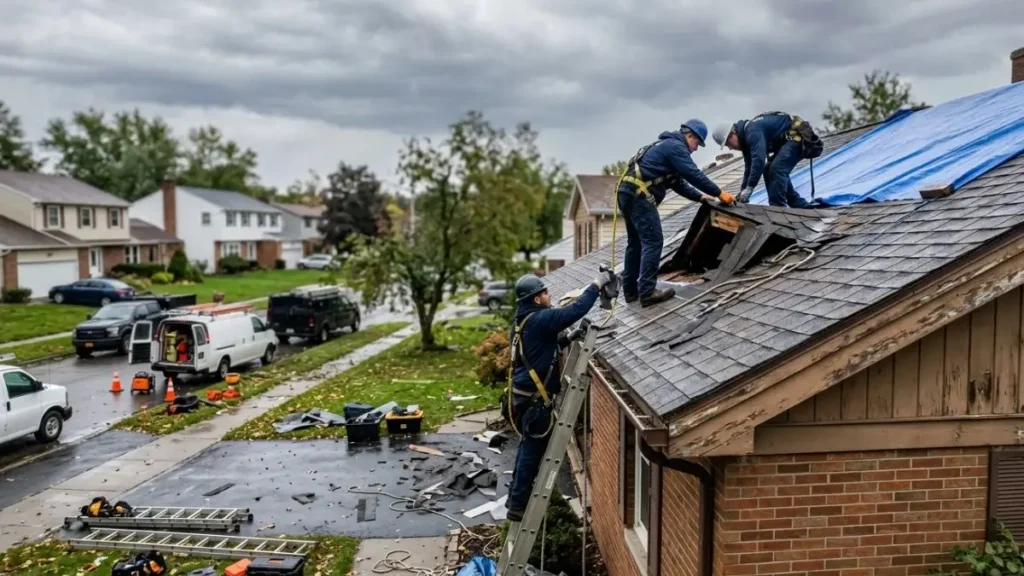
There are lots of emergency roofing Rochester, NY companies that offer temporary tarping services.
4. Contact an Emergency Roofing Contractor
The roof’s damage is assessed, the roof’s structure is secured, and roofers will recommend roof repairs or roof replacement.
Emergency roofing service may involve:
- Roof tarping
- Leak control
- Emergency repairs
- Structural assessments
- Insurance documentation assistance
Quick response minimizes further damage.
Emergency Roof Tarping Explained
One of the most frequent emergency services after storms is the roof tarping service.
Damaged areas are covered with a heavy-duty waterproof tarp to keep the water out until they can be fixed.
Benefits include:
- Immediate leak protection
- Reduced interior damage
- Protection during insurance processing
- Prevention of mold growth
Tarping is particularly critical when it is still raining.
Temporary Repairs vs Permanent Repairs
Emergency repairs will stabilize the situation, but there may still be permanent solutions required.
Temporary Repairs
- Tarp installation
- Minor sealing
- Emergency leak patches
These solutions act as a stopgap measure in the meantime until the weather clears up or inspections are made.
Permanent Repairs
- Shingle replacement
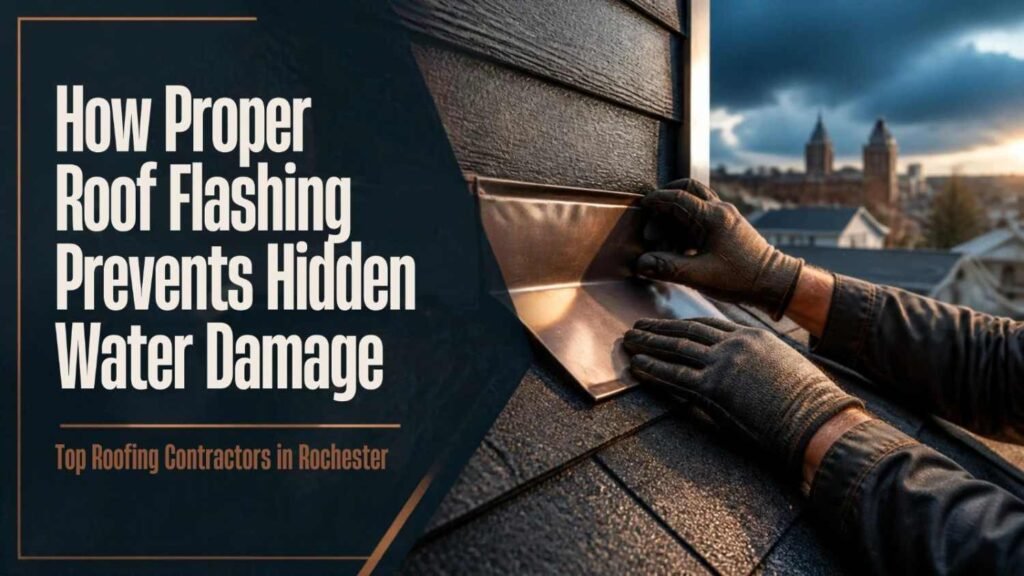
- Flashing repairs
- Structural repairs
- Full roof replacement as necessary
The level of permanent works needed is decided by a professional inspection.
When Roof Replacement Becomes Necessary
Not all storm damage can be repaired. Strong winds, heavy rain, or wind-driven rain can cause damage to the roof structure.
Replacement may be suggested if:
- Damage is widespread
- Multiple leaks exist
- The roof is already aging
- Structural decking is damaged
- Repairs exceed replacement value
Under those scenarios, sometimes it’s better to replace an entire unit.
Insurance and storm damage claims
Roof damage caused by storm events may be covered by homeowners’ insurance policies, but it’s important to have appropriate documentation.
Steps for Filing a Claim
- Document all visible damage
- Contact your insurance provider quickly
- Schedule a professional inspection
- Keep receipts for emergency services
- Meet with insurance adjusters if necessary
During the claims process, many emergency roofing Rochester, NY contractors help homeowners.
How Weather Delays Affect Emergency Repairs
Work under the permanent roof may be temporarily delayed due to weather.
Factors include:
- Ongoing storms
- Snow and ice conditions
- Extreme cold temperatures
- Safety concerns for roofing crews
When it comes to getting the protection of a professional contractor, they will focus on temporary repairs until a permanent repair is available.
Choosing the Right Emergency Roofing Contractor
When in an emergency, it is important to choose a reputable contractor.
Look for:
- Licensed and insured professionals
- Local Rochester experience
- 24/7 emergency response
- Positive customer reviews
- Clear written estimates
- Warranty-backed work
Stay away from storm chasers and contractors who show up after storms without a local reputation.
Preventing Future Roofing Emergencies
Storms are not preventable, but steps can be taken in advance of the event that minimize storm-related emergency risks.
Annual Roof Inspections
Professional inspections reveal weak areas in advance of storms.
Gutter Cleaning
Clogged gutters lead to roof damage and overflows.
Tree Trimming
Prune away weak branches to minimize the risk of damage in high winds.
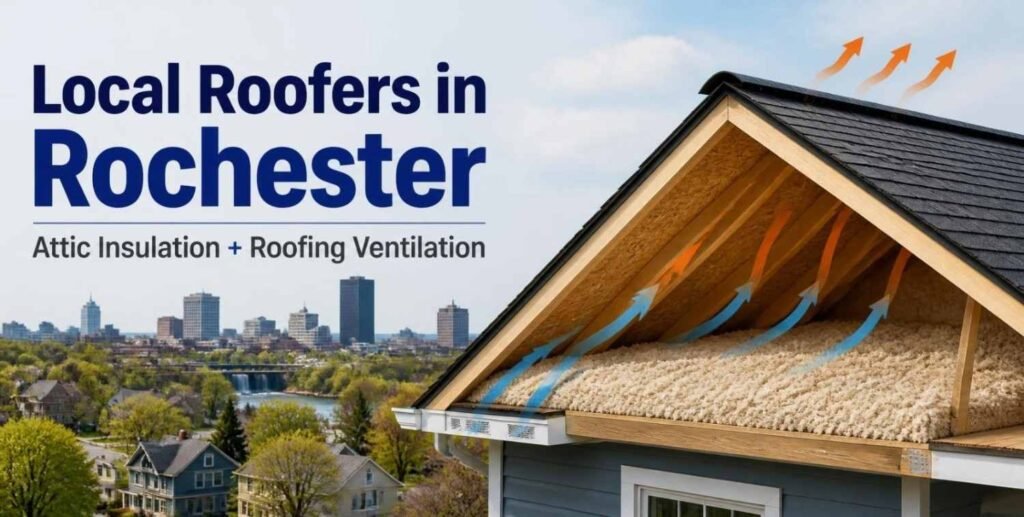
Attic Ventilation Improvements
Ice dams and moisture buildup can be avoided with proper ventilation.
Regular upkeep helps to extend the lifespan of the roof and enhances storm resistance.
The Importance of Fast Response
The cost of postponing emergency repairs to roofs can be significantly higher.
A dribbling leak can progress to:
- Mold remediation
- Ceiling replacement
- Electrical repairs
- Insulation replacement
- Structural reconstruction
The prompt response can save your house and money.
How Emergency Roofing Protects Your Home From Secondary Damage
The primary reason for homeowners to act fast following storm damage is to avoid secondary storm damage. The first storm can split the roof in some spots, and a failure to take the necessary steps can soon be a problem all over the house.
For instance, a leak in a roof can seem insignificant at first, but water can seep through insulation, walls, and ceilings before it becomes apparent. This trapped water causes wood framing to break down over time, breaks down drywall, and provides a perfect breeding ground for mold.
The following are typical examples of secondary damages:
- Stains and collapse on the ceiling.
- Mold/mildew infestation
- Torn carpet and furniture
- Electrical system hazards
- Insulation deterioration
- Structural wood rot
Professional emergency roofing Rochester, NY, not only repairs the visible damage but also tries to avoid these huge problems in the future.
The Importance of Professional Roof Inspections After Storms
If your roof appears to be in good condition from the ground, it could be damaged by the storm. Tiny fractures formed by high winds and hail can eventually form and worsen over time, especially as the shingles get loose.
A roof inspection by a professional will usually cover the following:
Exterior Inspection
- Missing or lifted shingles
- Hail impact damage
- Flashing separation
- Gutter and drainage issues
- Structural sagging signs
Interior Inspection
- Attic moisture levels
- Insulation damage
- Mold or mildew signs
- Water penetration points
These checks can be valuable in determining early on whether a problem exists, which can be a costly emergency if left uncorrected.
Read more—👉🏻👉🏼👉🏽👉🏾👉🏿 Best roofing company Rochester, New York
Why Delayed Repairs Become More Expensive
After storm damage, many homeowners put off repairs until they see the damage as inconsequential or because it takes time to file an insurance claim. But when there are delays, the repair cost will be a lot.
For example:
- A minor leak repair may cost a few hundred dollars initially.
- If ignored, the same leak can lead to drywall replacement, mold remediation, flooring repairs, and structural restoration, costing thousands
Water damage can rapidly proliferate, particularly during Rochester’s rainy seasons and freeze-thaw winter cycles.
Emergency roofing contractors sometimes stress that it is important to provide temporary protection as soon as possible, like tarping and sealing the roof, to save homeowners a significant amount of money.
How Rochester Winters Increase Roofing Risks
Winter weather presents special roofing problems in Rochester.
Ice Dams
Ice dams are created by the heat from the roof melting the snow on the roof surface and causing it to refreeze near the gutters. When this happens, water is left behind the ice barrier and can seep under the shingles and into the home.
Heavy Snow Loads
Roofing systems that are already aging can become overburdened by snow accumulation and can sag or collapse.
Freeze-Thaw Cycles
Small roof cracks allow water to seep in and, when frozen, cause the cracks to enlarge over time.
With these factors in mind, roofs that are damaged due to a storm should not be ignored for the winter season.
Emergency Roofing and Home Value Protection
Your roof is an important part of your property’s value. Storm damage that is visible will impact curb appeal and can cause concerns during home inspections.
Unresolved roofing issues often:
- Lower resale value
- Delay home sales
- Trigger inspection failures
- Increase buyer negotiation demands
Fast repairs help maintain the value of your property and keep your home in great shape.
Questions to Ask an Emergency Roofing Contractor
Homeowners should ask these questions before hiring a contractor:
- Are you licensed and insured?
- Do you provide emergency tarping services?
- Can you help with insurance documentation?
- Do you offer warranties on repairs?
- How quickly can repairs begin?
A professional contractor will give you clear answers and will also give a written estimate before starting work.
Building a Storm-Resistant Roof for the Future
Once the leaks are fixed or replaced, many homeowners opt for roofing enhancements that will increase protection against future storms.
Popular upgrades include:
- Impact-resistant shingles
- Improved attic ventilation
- Waterproof underlayment systems
- Reinforced flashing installation
- Enhanced drainage of gutters/supplements
These enhancements provide a lower risk of future emergencies and prolong the life of roofs.
Final Thoughts
While storm damage can be massive, a lot can be done by taking action as soon as possible in the aftermath of severe weather. Emergency roof repair in Rochester, NY, by professionals ensures that damage is stabilized, potential complications are averted, and safety is restored in the shortest time possible.
Regardless of whether your roof has missing shingles, leaking roofs, or extensive structural damage, you should ask for professional roof repair services right away to safeguard your property and save yourself from potentially high repair bills later on.
With the proper knowledge of post-storm management and help from the experts in emergency roof repair in Rochester, homeowners can bounce back quicker and keep their homes safe throughout the year.
FAQs
1. What qualifies as a roofing emergency?
A roofing emergency includes severe leaks, storm damage, fallen trees, missing shingles exposing the roof, sagging sections, or structural damage that threatens safety or allows significant water intrusion into the home.
2. How quickly should I call an emergency roofing contractor?
You should contact an emergency roofing contractor immediately after noticing storm damage or active leaks. Fast response helps prevent additional water damage, mold growth, and costly structural repairs inside the home.
3. Will homeowners’ insurance cover emergency roof repairs?
Most homeowners’ insurance policies cover sudden storm-related roof damage caused by wind, hail, fallen trees, or heavy weather. Coverage usually excludes normal aging, neglect, or lack of roof maintenance over time.
4. What is emergency roof tarping?
Emergency roof tarping involves placing a heavy-duty waterproof tarp over damaged roof sections to temporarily prevent rainwater intrusion until permanent repairs or replacement work can safely be completed later.
5. Can I stay in my house after storm roof damage?
It depends on the severity of damage. Minor leaks may allow safe occupancy, but major structural damage, electrical hazards, or ceiling collapse risks may require temporary evacuation for safety reasons.
6. How long do emergency roof repairs take?
Temporary emergency repairs are often completed within hours. Permanent repairs or full roof replacement may take several days, depending on weather conditions, material availability, and the extent of storm damage.
7. Should I climb on my roof after a storm?
No. Climbing on a storm-damaged roof is dangerous due to slippery surfaces, structural instability, and hidden hazards. Always allow trained roofing professionals to inspect and assess roof damage safely.
8. What types of storms commonly damage roofs in Rochester?
Rochester roofs are commonly damaged by windstorms, hail, heavy rain, snow accumulation, ice dams, and falling tree branches during severe weather conditions throughout the year.
9. How can I prevent future roofing emergencies?
Regular roof inspections, gutter cleaning, attic ventilation improvements, and trimming nearby trees help reduce storm-related roofing risks and extend the lifespan of your roofing system significantly.
10. When is roof replacement better than repair?
Replacement is recommended when storm damage is widespread, structural decking is compromised, multiple leaks exist, or the roof is already near the end of its expected lifespan.