

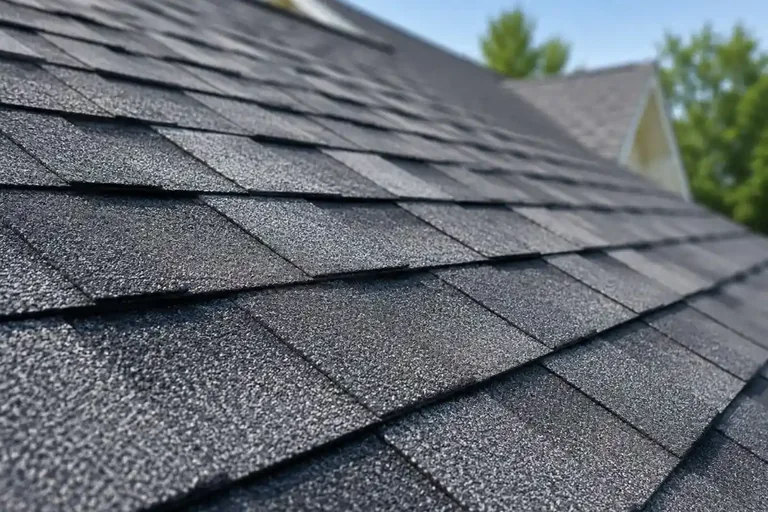
The blog tells about Flat Roofing Systems in Rochester, NY: Pros and Cons. Throughout Rochester, New York, flat roofs are seen on modern homes, apartment complexes, and several residential additions, as well as commercial buildings. The cleanliness, functionality, and affordability of these items make them a great choice for a lot of property owners. But Rochester’s climate creates conditions that are not typical of other areas, so they should all be taken into account when selecting a flat roofing system.
Over time, roof performance can be impacted by heavy snowfalls, ice dams, rain, and freeze-thaw conditions, as well as seasonal changes in temperature. By comprehending the pros and cons of flat roofs, you can better inform your decisions regarding installation, maintenance, and the long-term value.
While every flat roofing Rochester, NY system has its advantages and disadvantages, this guide outlines the key advantages and disadvantages that property owners should be aware of before investing in a flat roof system.
What Is a Flat Roofing System?
As the name suggests, flat roofs are not flat! They have a slight slope to let water run down.
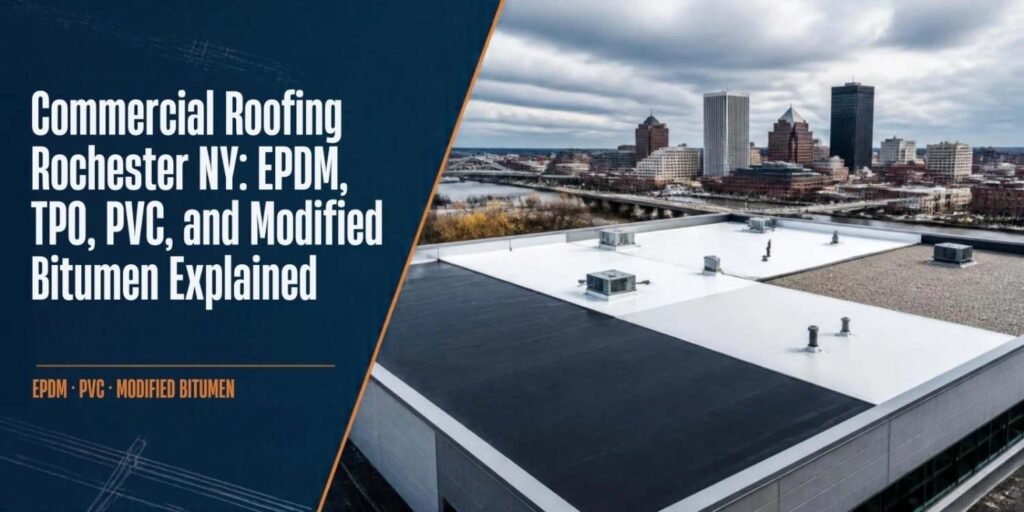
Common materials that are used for flat roofs are:
- EPDM Rubber Roofing
Long-lasting synthetic rubber roofing sheet that is applied to homes and commercial structures.
- TPO (Thermoplastic Polyolefin)
Reflective single-ply membrane that has established energy-efficiency credentials.
- PVC Roofing
Excellent chemical and moisture-resistant, strong, heat-welded membrane.
- Modified Bitumen
A roofing system that is an asphalt-based material covered by fiberglass or polyester.
- Built-Up Roofing (BUR)
A traditional system made of multiple asphalt and felt layers.
The systems all have different performance characteristics but are all designed to provide an impervious barrier over low-slope roofs.
Why Flat Roofs Are Popular in Rochester
There are a number of practical and economical advantages to using flat roofs.
Pros of Flat Roofing Systems
1. Lower Installation Costs
In general, the cost of materials and labor for a flat roof is less than for a steep-slope roof. The simpler design often results in lower upfront installation costs, making flat roofing an attractive option for budget-conscious property owners.
2. Easier Maintenance Access
Flat roofs can be accessed and maintained more easily and safely. As opposed to steep roofs, HVAC equipment, vents, and roofing elements can be located with ease by contractors, and maintenance will be easier, which can further decrease the cost of service.
3. Efficient use of space
The rooftop offered by flat roofs can be used for:
- HVAC systems
- Solar panels
- Outdoor seating areas
- Rooftop gardens
- Additional storage equipment
This is particularly useful in urban or commercial environments as space is limited.
4. Modern Architectural Appeal
Flat roofs give a neat and sophisticated look, which fits in well with modern structures. Conveyors are highly valued by many homeowners and developers for the contemporary appearance they offer for their homes and commercial buildings.
5. Faster Installation Time
Having a simpler design, flat roofs can be installed in less time compared to complex pitched roofs. The quicker it’s installed, the less labor time is needed and the less disruption for occupants, if any.
6. Energy Efficiency Potential
Some flat roofing membranes, especially reflective TPO and PVC roof membranes, can provide heat rejection in the summer months. This can help to reduce the amount of energy consumed and the cost of cooling in hot weather.
7. Suitable for Commercial Buildings
Commercial properties benefit from flat roofs as they make it easy for maintenance staff members to gain access and can be used to house large equipment on the roof. They are suitable for warehouses, offices, retail buildings, and apartment complexes.
8. Improved access to removing snow
Flat roofs enable snow removal by professionals if it becomes a problem in Rochester’s snowy winter months. This can be helpful in the management of excessive snow loads during heavy lake-effect snow events.
9. Lower Material Waste
In general, flat roofing systems generate less material waste during installation because there are large membrane sheets that cover wide areas. This can improve the installation’s environmental and economic impacts.
10. Adaptability for Additions
Flat roofs may be more easily adapted to building additions, upgrading existing rooftop equipment, and future building changes. They are simple in design and allow for flexibility in terms of changing property requirements.
Cons of Flat Roofing Systems
Although flat roofs have numerous advantages, they also have some serious disadvantages, particularly in Rochester’s climate.
1. Higher Risk of Water Pooling
Water drainage is one of the greatest Rochester flat roofing projects challenges. Drainage systems need to be designed and maintained correctly; otherwise, water may pool in low areas due to the low slope.
Standing water can cause:
- Leaks
- Membrane deterioration
- Mold growth
- Structural damage
2. More Frequent Maintenance Needs
Compared to pitched roofs, flat roofs need much more frequent checks and maintenance. All drains, seams, flashing, and membranes should be inspected on a regular basis to ensure that there are no leaks or water intrusion.
If routine maintenance is not performed, the roof could lose a lot of life.
3. Shorter lifespan than some pitched roofs
While modern flat roofing materials are expected to have a lifespan, many flat roofs will have a shorter life expectancy than premium metal or slate pitched roofs.
Typical lifespans include:
- EPDM: 20–30 years
- TPO/PVC: 20–30 years
- Modified bitumen: 15–25 years
4. Snow and Ice Challenges
Heavy snowfall can be a problem for flat roofs in Rochester. Snow does not slide off these roofs readily like steep roofs, where it does. Whereas on steep roofs, snow does slide off easily, it does not on these roofs.
This will lead to a higher risk of:
- Excessive snow loads
- Ice dam formation
- Wetted sections of the floor surface
Proper structural design and insulation are essential to handle these conditions.
5. Leak Detection Can Be Difficult
Leaks in flat roofs can flow under the roof surface and then manifest in the interior of a structure. This can make it more difficult to find and fix the leak.
Commonly, professional inspections are needed to accurately pinpoint problems.
6. Vulnerability to Punctures
Flat roof membranes can be damaged by:
- Foot traffic
- Falling branches
- Sharp debris
- Improper maintenance work
If not patched in a timely fashion, punctures can let water into the vehicle.
7. Drainage Systems Require Attention
Flat roofs depend a lot on drains, scuppers, and gutters to get rid of water. Build-up of rainwater in the drains can cause flooding and stagnation within a short period.
Cleaning is necessary regularly, particularly in the fall leaf season and after storms.
8. Potential for Higher Long-Term Maintenance Costs
Although the initial cost of installation might be less, maintenance and repairs can be costly over time. Property owners should plan to have periodic inspections and drainage maintenance, as well as membrane repairs.
9. Limited Attic Space
Typically, flat roofs offer less attic or storage space than pitched roofs. This can limit the flexibility of insulation and storage in certain homes.
10. Not Ideal for Every Home Style
Flat Roofs are ideal for contemporary and commercial designs. They can appear out of place on a traditional home or detract from the curb appeal based on neighborhood aesthetics and homeowner preferences.
Flat Roofing Performance in Rochester’s Climate
The climate of Rochester both poses opportunities and challenges for flat roofs.
Winter Considerations
In case of heavy snow and ice, the following is required:
- Strong structural support
- Proper insulation
- Effective drainage
- Regular snow monitoring
An installed roof needs to be professionally installed to provide the proper support for the local snow loads.
Spring and Summer Considerations
With rainstorms and humidity comes an increase in the importance of:
- Waterproof membranes
- Seam integrity
- Drain maintenance
- Mold prevention
Reflective roofing materials can also help save on summer cooling expenses.
Choosing the Right Flat Roofing Material
It’s not possible to suggest a specific material that can be used, as it will be dependent on budget, building type, and maintenance expectations.
| Material | Best For | Key Advantages |
| EPDM | Budget-conscious properties | Affordable, flexible, durable |
| TPO | Energy efficiency | Reflective, UV-resistant |
| PVC | High-performance commercial roofs | Strong seams, chemical resistance |
| Modified Bitumen | Residential and small commercial | Tough, repairable |
| BUR | Traditional commercial systems | Excellent waterproofing |
A local roofing expert can help you determine what roofing system will be best for your property.
Maintenance Tips for Flat Roofs
To ensure a long life and optimal performance:
1. Inspect the roof twice a year
Search for broken membranes, water in the ground, and blocked drains.
2. Regularly clean drains and gutters
Keep water from accumulating by clearing leaves and debris.
3. Address repairs promptly
Leaks can easily become large if they are caused by small punctures or seam problems.
4. Monitor snow accumulation in winter
Large snow accumulations can lead to professional snow removal.
5. Schedule professional inspections
Periodic expert assessments can identify potential issues before they become symptomatic.
Who Should Consider Flat Roofing in Rochester?
Flat roofing can be a suitable choice for:
- Commercial building owners
- Modern home designs
- Apartment buildings
- Home additions
- Property owners seeking lower upfront costs
For homeowners who desire low maintenance and high snow shedding, however, other roofing systems, such as pitched roofing systems, might be more desirable.
The most important factor when deciding to invest in flat roofing Rochester, NY is selecting the appropriate material, hiring professional roofing contractors, and maintaining your flat roof. A flat roofing system, if correctly designed and maintained, can offer long-lasting protection and performance for a long time.
Additional Considerations Before Installing a Flat Roof in Rochester, NY
There are more factors to consider when deciding on a flat roof than its cost and materials. Property owners should also consider the long-term performance, maintenance needs, and the roofing system’s compatibility with plans. By knowing this, you can get the most from your investment in flat roofing Rochester, NY.
The Importance of Professional Installation
The best roofing material will not work if it is not installed properly. Since water drainage is dependent on precise workmanship and a very slight slope, flat roofing has to be carefully executed to ensure this. A minor installation error can allow water to get into the roofing system and cause costly damage in the long run.
It is clear to professional roofing contractors that:
- Proper drainage design
- Membrane installation techniques
- Flashing requirements
- Local building codes
- Snow load considerations
Relying on the expertise of professional contractors can help to minimize roofing issues that might arise prematurely.
Energy Savings Opportunities
There are lots of contemporary flat roofing systems developed to cater to energy efficiency. Reflective roofing membranes can help minimize heat absorption during Rochester’s hotter seasons.
Benefits include:
- Lower cooling costs
- Improved indoor comfort
- Improved efficiency of HVAC systems
- Enhanced building efficiency
The energy savings that commercial property owners can realize when investing in new, state-of-the-art reflective roofing materials are more apparent.
Flat Roofs and Solar Panel Installation
Solar energy installations can be installed at optimal angles on flat roofs without depending on the roof’s slope.
Advantages include:
- Better panel positioning
- Easier maintenance access
- Flexible system expansion
- Improved energy production potential
With the increased awareness of renewable energy, Rochester homeowners enjoy flat roofs.
Protecting Property Value
A flat roof can add value to the property if it is properly maintained. When people are considering a new roof or a new tenant, they want to see a roofing system that is professionally installed and well-understood.
Keeping records of:
- Roof inspections
- Repairs
- Maintenance schedules
- Warranty information
can enhance the value of a given property in resales or leasing opportunities.
Planning for Future Repairs and Replacement
As with all roofing systems, flat roofs need to be replaced after a period of time. Property owners need to budget for future roofing needs.
Eventual replacement signs may include:
- Frequent leaks
- Widespread membrane damage
- Persistent ponding water
- Significant aging of roofing materials
Owners who plan and deal with issues before they become serious will prevent having to replace parts during an emergency or when expenses are not anticipated.
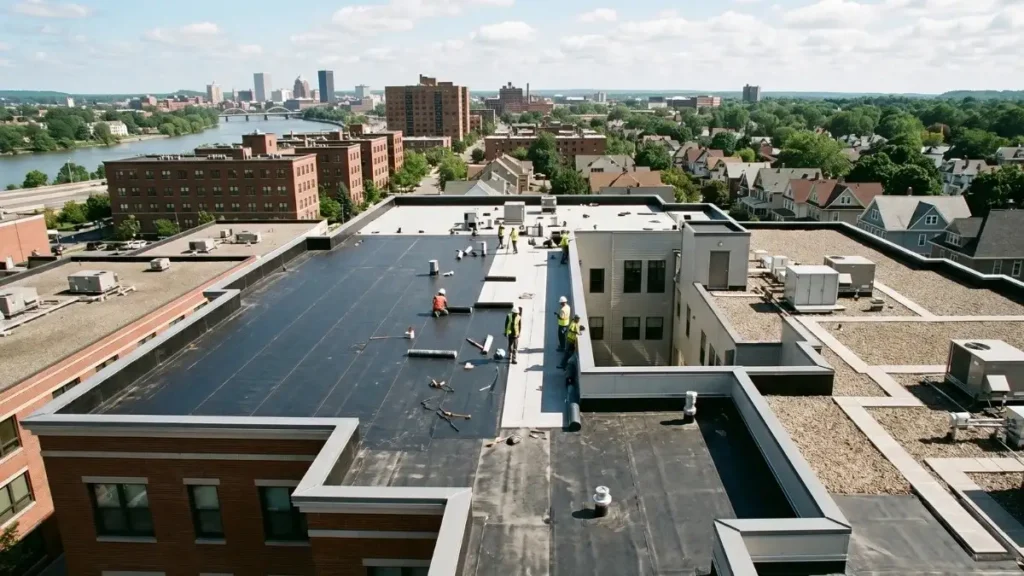
Preventive Maintenance – The Value of Maintenance.
Preventive maintenance continues to be the most effective method to assure a long life for a flat roof. Problems usually get worse over time and may be easily corrected at a reasonable cost if caught at an early stage.
Routine inspections will alert to:
- Seam separation
- Drainage issues
- Flashing damage
- Membrane wear
- Moisture infiltration
Regular maintenance can prolong the lifespan of the roof by a couple of years and cut down repair costs.
Final Thoughts
Many Rochester buildings are an ideal fit for flat roofing, which is both functional and contemporary, and frequently more affordable than other roof options. They offer a usable rooftop area, maintenance access, and a fresh and modern look.
But Rochester’s severe winters and snowfall can present some difficulties not to be taken lightly. For long term performance, proper drainage, insulation, and ventilation, and routine maintenance are critical.
Frequently Asked Questions (FAQs)
1. How long does a flat roof typically last in Rochester, NY?
Most flat roofing systems last between 20 and 30 years, depending on material quality, installation methods, weather exposure, and ongoing maintenance practices.
2. Is flat roofing suitable for residential homes?
Yes. Flat roofs are increasingly popular for modern home designs, additions, garages, and contemporary architecture due to their clean appearance and space efficiency.
3. What is the biggest disadvantage of a flat roof?
The primary disadvantage is water drainage. Improper drainage can lead to ponding water, leaks, membrane deterioration, and potential structural damage over time.
4. Are flat roofs more expensive to maintain?
Flat roofs often require more frequent inspections and maintenance than pitched roofs because drainage systems and membrane integrity must be monitored regularly.
5. Which flat roofing material lasts the longest?
PVC and high-quality EPDM roofing systems typically offer some of the longest lifespans among flat roofing materials when properly installed and maintained.
6. Can flat roofs handle Rochester’s heavy snowfall?
Yes. Properly engineered flat roofs are designed to support local snow loads, but excessive accumulation should be monitored and removed when necessary.
7. How often should a flat roof be inspected?
Most roofing professionals recommend inspecting flat roofs at least twice per year and after major storms to identify potential issues early.
8. Are flat roofs energy efficient?
Many modern flat roofing systems use reflective materials that reduce heat absorption, helping improve energy efficiency and lower cooling costs during summer.
9. Can solar panels be installed on flat roofs?
Yes. Flat roofs provide excellent flexibility for solar panel placement, allowing optimal positioning and easier maintenance access compared to some pitched roofs.
10. How can I prevent leaks in a flat roof?
Regular inspections, prompt repairs, proper drainage maintenance, professional installation, and routine cleaning help prevent leaks and extend the roof’s lifespan.