

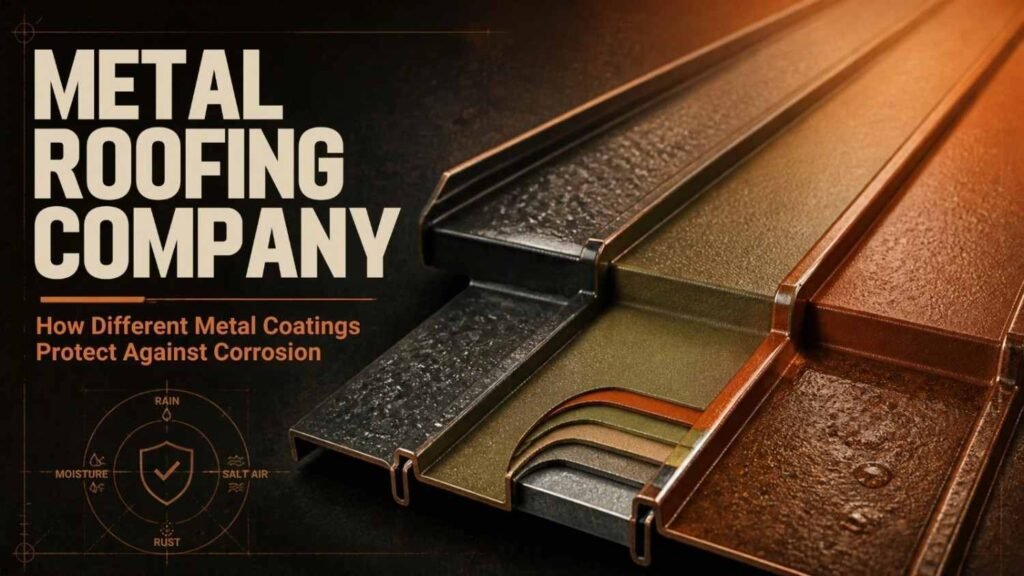
Metal Roofing Company: How Different Metal Coatings Protect Against Corrosion is an important topic for property owners who want a durable roofing system that can withstand changing weather conditions. Even though metal roofs are strong, durable and comparatively maintenance-free, the metal beneath the surface must be protected from corrosion. Damage or inappropriate choice of coating can cause roofing materials to be impacted by rain, moisture, snow, road salt, and temperature fluctuations over time.
For homeowners and commercial property owners in Rochester, NY, choosing the right metal roofing finish can make a significant difference in long-term roof performance. The methods by which various coatings protect metal are different. Some act as a barrier between the metal and the environment and others act as a sacrificial protection that helps protect the steel when small areas of the coating are damaged.
It’s important for property owners to know these differences so they can make better comparisons when they are choosing roofing materials, asking questions, and preparing for maintenance. A qualified metal roofing contractor can also tell you which coating your building needs in order for it to be compatible with the roof design, as well as with exposure conditions throughout the area.
Why Metal Roof Coatings Matter in Rochester, NY
Roofing materials have to deal with many of Rochester’s climatic challenges. Roofs may be subject to changing conditions throughout the year due to seasonal snowfall, rain, freezing and thawing, and high moisture periods. Roadside properties can also be subject to extra exposure from airborne salt and splash if they are close to properties that are de-iced during the winter.
The corrosion resistance of a metal roof is influenced by the type of base metal used, the protective coating, the paint system, the installation, and maintenance.
Moisture and Repeated Wetting
Flashing details, fasteners, gutters, and roof seams can gather water. The presence of moisture in these areas can lead to corrosion in the affected coatings.
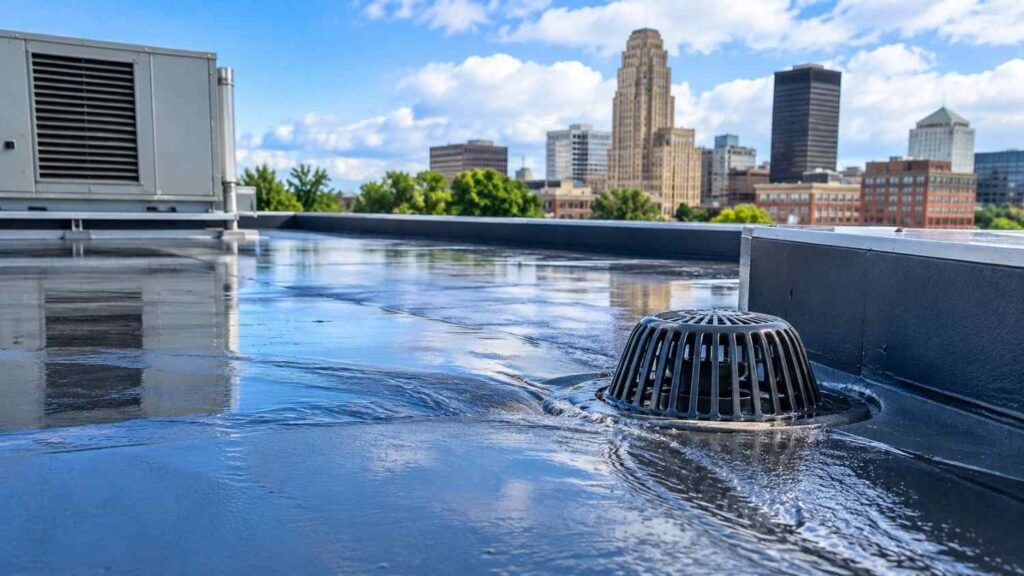
Prolonged wetting can be minimised with good roof design and drainage. But no matter how good the coating, if leaks persist, trapped debris or poor installation of roof components can affect the coating’s ability to keep water out.
Winter Salt Exposure
In cold temperate climates, road salt is extensively used for winter road maintenance. Exposed metal surfaces can corrode due to the salt-containing spray and deposits.
The risk is determined by the exposure, maintenance practices, roof geometry and location of the property. Exposed edges, fasteners, gutters, etc. in buildings located near heavily treated roads may need special attention.
Freeze-Thaw Conditions
If water enters an opening that is small enough, it can freeze and expand under the right conditions. Exposed joints or coating damage can be exacerbated by repeated freeze-thaw cycles, or new coating damage can occur, which can lead to leaks.
The coating is just a first step. Installation, appropriate sealants, correct fastening and adequate drainage are also important.
What Is a Metal Roof Coating?
A metal roof coating is a protective application to a metal roofing product to assist in minimizing moisture, oxygen, and environmental exposure. The coating can be a metallic coating, organic coating, or multiple layers of protective coatings.
Metal roofing panels are often finished with factory-applied protective finishes. Others are treated with a metallic finish first, and then a paint or resin finish is applied on top of that. These layers can offer various kinds of protection.
It is important to distinguish between a factory-applied protective finish and a liquid coating applied to an existing roof. They are not interchangeable.
The factory finish is specified for the roofing panel and for the manufacturing process. Liquid roof coatings are products that can be applied to specific types of existing roofs for certain applications, including waterproofing or restoring an existing surface that is compatible. A liquid coating should not automatically be considered a substitute for the original corrosion-protection system.
Common Metal Coatings Used for Roofing
Steel roofing Rochester products are coated using a few different coating systems. They all have distinct properties, prices and maintenance needs.
1. Galvanized Steel: Zinc Protection
Galvanized steel is a metal whose surface is coated with zinc. Zinc offers two types of protection.
It protects the steel from the environment as a barrier, which will slow the contact between the environment and the steel. Second, zinc can take the place of other steel in the vicinity of small exposed parts under certain conditions and protect it.
This second property is especially valuable since the small scratches and cut edges can be produced in manufacturing, installation or service.
Nevertheless, galvanized steel can not withstand corrosion. It is dependent on the zinc coating thickness and quality, environmental exposure, water drainage and the surface condition.
Potential advantages:
- Protects against barriers and is sacrificial.
- It is extensively used in Steel building products.
- May be applicable to multiple residential/commercial uses.
- May be offered in different layers of paint or finish.
Consideration: The zinc coating will be consumed over time, providing protection. The service life of the coating can be reduced by persistent moisture, aggressive chemical exposure, and coating damage.
2. Galvalume and Other Zinc-Aluminum Coatings
Galvalume is a trade name for a metal coating of aluminum, zinc and a little silicon. There are also zinc-aluminum coating systems available that are comparable.
These coatings have properties that are similar to the barrier properties of aluminum and the sacrificial protection properties of zinc. They can be found on some steel roofing Rochester and siding products.
Aluminum is used to create a protective surface layer, and the zinc is sacrificed for protection. The actual performance will depend on the coating composition, product specification and surrounding environment.
Potential advantages:
- Provides excellent corrosion protection in a variety of roofing applications.
- Coats the steel with a protective layer of metal.
- Is readily available in finished roofing materials.
- Can provide a valuable combination of durability and material cost.
Considerations: There are limitations to zinc-aluminum coatings. Some incompatible materials can have an impact on performance, as can prolonged wetness and inappropriate detailing. There are some products that are not suitable for certain uses where the product will come in direct contact with wet concrete or certain treated lumber or incompatible metals.
Follow the roofing manufacturer’s installation and compatibility guidelines.
3. Aluminum Roofing
Aluminum’s self-protecting surface layer of thin oxide makes it naturally corrosion resistant roofing. This layer acts as a barrier that prevents the next layer of metal from being further attacked by the environment.
Aluminum roofing doesn’t use a zinc coating to protect a steel substrate like coated steel does. But under improper conditions, aluminum can still corrode or become damaged at the surface.
Potential advantages:
- Naturally produces an oxide coating.
- Does not form red iron rust like steel.
- May be beneficial in moist or corrosive applications.
- Comparatively light-weight amongst a variety of roofing materials.
Complications to be aware of: When incompatible metals are present, aluminum can be contaminated, and some chemicals, as well as poor water conditions, can be a problem. It could also be more expensive to purchase a roofing material that will last longer.
For property owners, it is recommended that they look at the entire roofing system instead of just the material’s corrosion resistance.
4. Factory-Applied Paint and Resin Finishes
There are metal roofing panels that are coated with a further layer of paint or resin. These finishes give color, appearance, and yet another protection barrier.
The most widely used coatings are polyester-based, and more advanced coatings are silicone-modified polyester or fluoropolymer. Availability and performance depend on the manufacturer and product.
Finish may provide protection from direct exposure to weather and can enhance fading, chalking and surface deterioration resistance of the metallic coating.
Potential advantages:
- Offers a variety of colors and finishes.
- Provides protection from moisture and the environment.
- Can increase resistance to fading and weathering, depending upon the product.
- Makes it easier to coordinate roofing with the building’s exterior.
What to consider: Not all paint systems have the same performance. All of these factors are important: the thickness of the coating, the chemistry of the resin, the surface preparation, the quality of the application, and the terms of the warranty. The use of a premium paint finish does not remove the requirement for using the correct metal substrate and metal coating where necessary.
5. Specialty Protective Coatings
There are a number of metal roofing products that utilize specific coating systems, which have been developed for specific environmental or performance applications.
These can be used for improved chemical resistance, in specific industrial applications, or to provide greater protection in areas where sensitive components are present. They are suitable for the use indicated by the manufacturer based on manufacturer testing and declared limits of use.
A specialty coating should be selected based on the actual exposure conditions rather than simply because it is marketed as heavy-duty.
The majority of property owners could benefit more from a factory-finished roofing system that is installed and applied as per the manufacturer’s guidelines than from using an unfamiliar coating on an existing roof.
Comparing Metal Roof Coatings Rochester
There are a variety of options available and each has its own general characteristics, summarized here.
| Coating or material | Main protection mechanism | Important consideration |
| Galvanized steel | Zinc barrier and sacrificial protection | Zinc coating can gradually be consumed |
| Zinc-aluminum-coated steel | Aluminum-rich barrier protection and zinc contribution | Compatibility and detailing affect performance |
| Aluminum roofing | Naturally formed aluminum oxide layer | Avoid incompatible materials and unfavorable exposure |
| Painted or resin-finished steel | Additional protective barrier over the metal coating | Performance depends on coating chemistry and quality |
| Specialty coating systems | Varies by product | Confirm suitability for the specific environment |
These categories are not necessarily directly interchangeable. It can be a base metal, a metallic finish, or a further finish. A roofing panel can use two or more of these protection techniques.
How Metal Coatings Protect Against Corrosion
Knowing the basics of corrosion protection will help you understand why a roofing system being in good condition is as important as the name of the coating.
Barrier Protection
Barrier coating is the coating that is used to keep moisture, oxygen and other environmental materials away from the underlying metal.
This kind of protection can be provided by paint or many metallic coatings. Therefore, if this coating is not compromised and the roof drains well, then the underlying metal is not exposed to corrosive conditions to the same extent.
Damage can compromise this protection, particularly if water is allowed to constantly settle on the exposed surface.
Sacrificial Protection
Some coatings, including zinc-based coatings, can provide protection for steel if there are appropriate conditions for the coating to corrode.
If a small area of steel is exposed, adjacent zinc will corrode before the steel, which will help to minimize the corrosion of the exposed steel. The protection is not absolute and varies based on the condition, the type of coating and the size of damage.
Assumptions about the durability of a damaged coating should not be made.
Multiple Protective Layers
A number of roof panels are coated in metal and have a factory-applied paint finish. The metallic layer is there to protect the steel, and the outer finish is an additional barrier and gives the desired appearance.
If the exterior paint layer is scratched, the metallic paint may provide some protection. When damage is so severe that the underlying steel is exposed, the remaining protection will depend on the metal coating and the environment.
The complete product specification is more important than the finish colour because of this layered approach.
Which Metal Roofing Coating Is Best for Rochester Properties?
No one coating works for any roof in Rochester. The selection of the right one depends on the location of the building, the roof design, exposure to moisture or salt, budget and expected service.
Residential Homes
A good factory-finished steel roofing Rochester system could be an appropriate combination of durability, aesthetics, and affordability for an average home.
The following factors should be compared between homeowners: metallic coating specification, paint system, warranty coverage and installation requirements. The drainage system of the roof and the quality of the flashing and fastenings are also important.
Commercial Buildings
Commercial properties can have complex rooftop equipment, maintenance access needs, complex drainage systems and large roof areas.
The exposure conditions of the roof and the manufacturer’s recommended system for such exposure should be taken into account when building owners are selecting an exposed roof system. The panel profile, panel fastening or structure of a commercial roof can be different from a residential roof.
Properties Near Roads or Areas With Higher Salt Exposure
The selection of the product and maintenance planning of the building might require careful consideration in the case of buildings exposed to salt sprays or frequent salt deposits.
It is important that the contractor considers the exposure and does not blindly prescribe the same finish recommended for a less exposed property. It’s particularly important when it comes to compatibility with panels, fasteners, flashings, gutters, and other parts.
Buildings With Complex Roof Details
Roof valleys, roof top penetrations, skylights, chimneys, and roof surface changes in direction can result in areas where water can pool or become more complex.
The roofing system has to be flashed and detailed correctly to ensure effective water control. While selecting a corrosion-resistant panel is important, it cannot make up for the poor design or installation of the joints.
Metal Roof Maintenance: How to Protect the Coating
A long-lasting surface coating needs sensible treatment. Inspections can assist property owners in discovering minor issues before they become a larger problem on the roof.
Inspect After Severe Weather
If there is significant storm damage, look for any visible damage when safe. Check for missing panels, loose parts, scratches, or obstructions that might block the drainage.
When entering a roof constitutes a fall hazard, it should be inspected by qualified personnel. It is not recommended for homeowners to walk on surfaces they do not know the metal roofing surface is.
Keep Gutters and Drainage Paths Clear
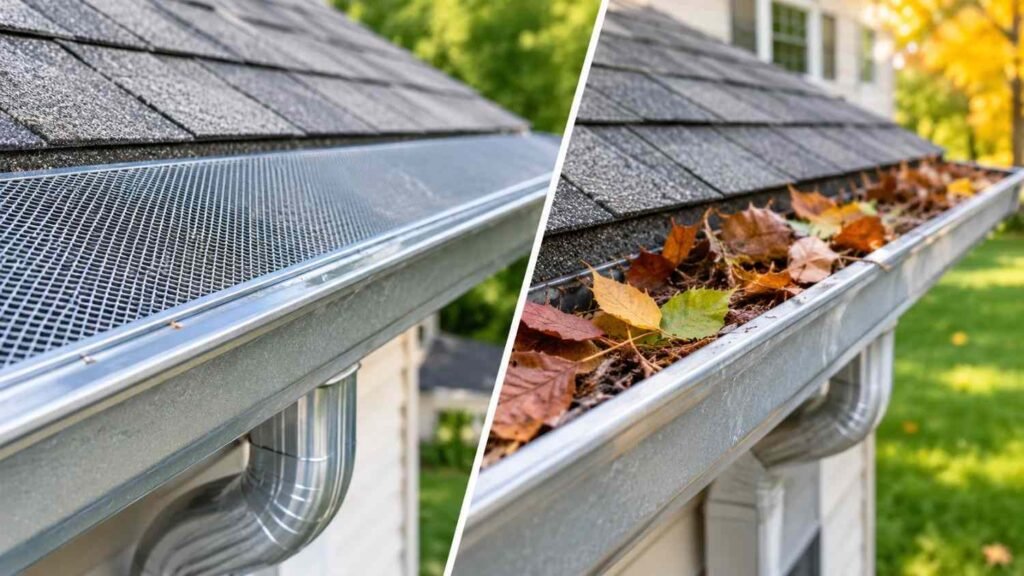
Guttering and drainage paths can be blocked by leaves, branches and other rubbish. Water can back up or collect at seams and around the edges of roofs.
Maintain drainage systems clear as per the manufacturer’s recommendations and as per the conditions of the property. Be extra careful around any area where trash is likely to accumulate.
Address Scratches and Coating Damage
If there are scratches or damaged finishes, they should be evaluated according to the roofing manufacturer’s repair guidelines. Depending on the location, depth and size of damage, the appropriate response varies.
If the original finish is present, do not assume that any paint or sealant that is available will work. Improper product usage can cause adhesion issues or impact warranty.
Avoid Harsh Cleaning Methods
Avoid using aggressive cleaning techniques or the wrong chemicals that can cause damage to the protective finishes. Follow the manufacturer’s directions for the use of cleaning products and techniques.
Pressure washing should not be done randomly, particularly in and around seams, fasteners, flashing or where water may be able to enter the building.
Check Fasteners, Flashing, and Contact Points
Fasteners, roof openings, and material connections should be given special consideration on inspections.
Moisture can find its way into the system through loose fasteners, damaged washers, incompatible metal contact, or failure of sealants. A certified contractor will be able to identify the need for either a repair or a replacement.
Warning Signs That a Metal Roof May Be Corroding
Corrosion can occur in select areas and eventually spread to larger parts of the roof.
Here are some general indications of trouble:
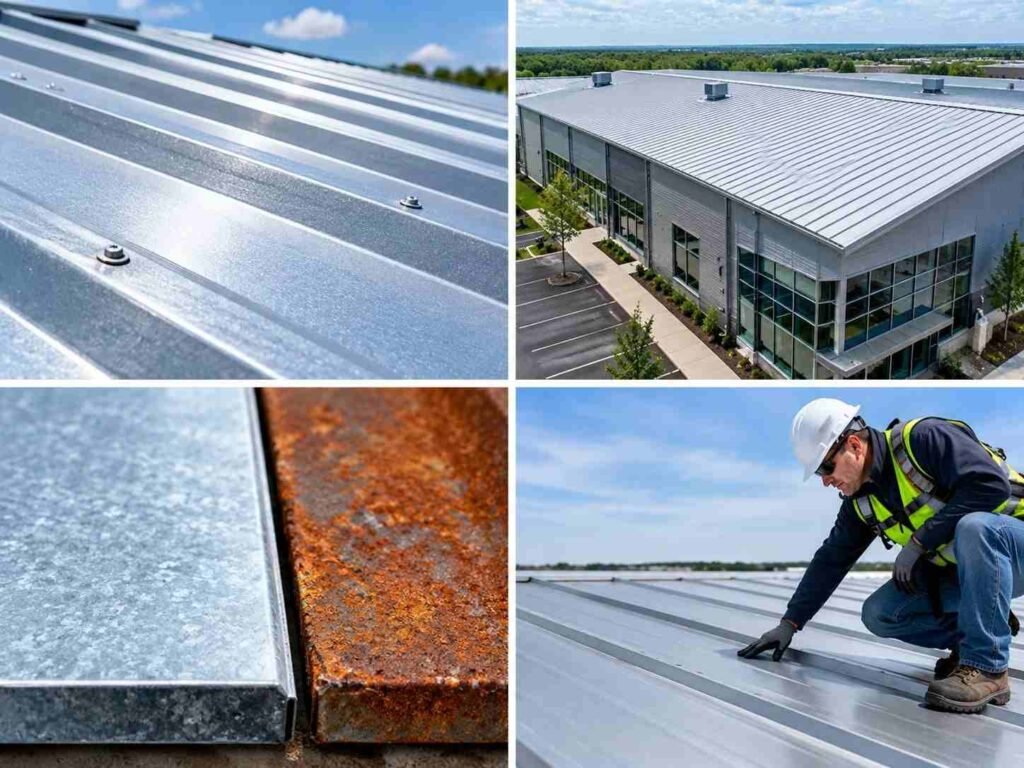
- Reddish-brown rust on exposed steel.
- Blistering, peeling, or flaking paint.
- Persistent discoloration around fasteners or seams.
- Visible damage to the metallic or painted coating.
- Corrosion near gutters, flashing, or cut edges.
- Water stains or leaks inside the building.
- Deterioration around areas where debris remains wet.
Dirt or deposits, or other causes, can be a source of discoloration, which isn’t corrosion. A professional inspection can aid in the identification of the cause and whether the affected area should be cleaned, repaired with a coating, replaced, or if any other work may be required.
If there is a leak, the issue should be resolved, and not merely addressed as a visible stain.
Conclusion
Selecting the appropriate protective finish is a key aspect of planning a long-lasting metal roof. Galvanized steel, zinc-aluminum coated steel, aluminum, and factory-applied paint systems offer different types of protection; some roofing products are multi-layer to achieve multiple types of protection.
The best choice for Rochester property owners will depend on the exposure conditions, design of the roof, compatibility of materials and the quality of the installed roof. Another benefit of routine maintenance on metal roofs is that it can help you spot coating failures, drainage issues, and corrosion before they become major issues.
A Metal Roofing Company Rochester NY will be able to discuss the various roofing systems available, the specifications of these products, and suggest a roofing system that would be appropriate for the building. When thinking of the roofing assembly as a whole, not just the surface finish, property owners can be better informed when making the investment in roof protection.
Frequently Asked Questions
1. Which metal roof coating is best for Rochester, NY?
The best option depends on the building’s exposure, roof design, budget, and maintenance requirements. Quality factory-finished steel and suitable aluminum systems are common options to evaluate.
2. Does galvanized steel roofing rust?
Galvanized steel has a zinc coating that helps protect the underlying steel. However, corrosion can eventually occur if the zinc is consumed, the coating is damaged, or exposure conditions are unsuitable.
3. What is the difference between galvanized steel and Galvalume?
Galvanized steel uses a zinc coating, while Galvalume uses a zinc-aluminum-based coating. Both protect steel, but their composition, performance characteristics, and application limitations differ.
4. Are painted metal roofs protected against corrosion?
Paint provides an additional barrier, but its effectiveness depends on the underlying metal protection, finish quality, installation, and condition. Scratches and damaged areas may require manufacturer-approved repairs.
5. Can road salt damage a metal roof?
Salt deposits can contribute to corrosion under certain conditions, especially where coatings are damaged or moisture remains. The risk depends on the metal, coating system, and level of exposure.
6. How often should a metal roof be inspected?
Inspection frequency should follow the manufacturer’s recommendations and reflect the property’s environment, roof complexity, and history. Additional checks may be appropriate after severe weather or when damage is suspected.
7. Can a corroded metal roof be repaired?
Some localized corrosion can be addressed through cleaning, approved coating repairs, or component replacement. Extensive deterioration may require more substantial repairs or roof replacement after professional assessment.
8. Do metal roof coatings Rochester eliminate maintenance?
No. Protective coatings reduce exposure to corrosive conditions, but drainage, fasteners, flashing, debris, and physical damage still require attention.
9. Is aluminum roofing more corrosion resistant than steel roofing?
Aluminum naturally forms a protective oxide layer and does not develop red iron rust like steel. However, performance depends on the environment, material compatibility, roof design, and the specific product.
10. What should I check in a metal roofing warranty?
Review the covered product, corrosion and finish coverage, exclusions, exposure restrictions, installation requirements, maintenance obligations, and approved repair methods.