

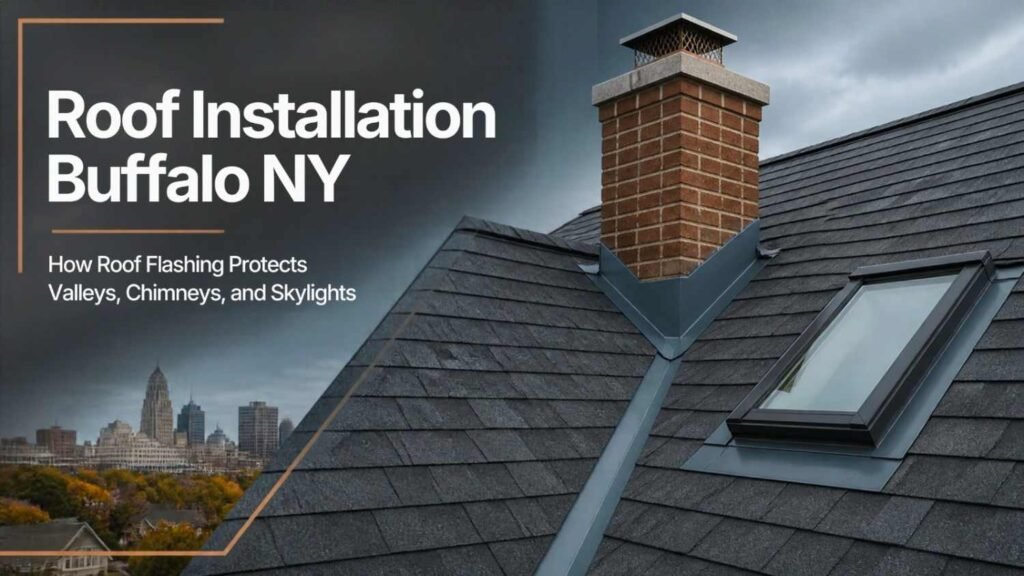
Roof Installation Buffalo NY: How Roof Flashing Protects Valleys, Chimneys, and Skylights is an important topic for homeowners planning a new roof or replacing an existing roofing system. It is important to seal areas where roof sections join, chimneys pierce the roof, or skylights open up because water can get through a small opening in the roofing material there. Roof flashing Buffalo NY is designed to divert water around weak areas of the roof and away from these areas and towards the roof drainage system. When selecting roofing materials, organizing roof installation, and avoiding moisture issues, homeowners can better understand the importance of flashing by understanding how the process works.
What Is Roof Flashing and Why Is It Important?
Roof flashing Buffalo NY is the protective material placed around any roof joint, opening, edge or other location that may allow water to enter the roofing system. It is typically configured using metal, but some roofing systems use special membranes or appropriate flashing products.
The overall objective of flashing is to redirect water away from sensitive areas instead of water accumulating around joints or under roof surface coverings. Flashing is installed with shingles, underlayment, roof decking, and other parts to create a roof assembly that is waterproof.
When homeowners are thinking about Roof Installation Buffalo NY, it is imperative that they pay attention to the flashing, in addition to the roof materials they are installing. No matter how well shingled, flashing is the first line of defense against leaks.
Buffalo experiences winter and summer conditions and related changes like rain, snow, freezing temperatures, freeze-thaw cycles, etc. These conditions can lead to vulnerabilities in roof openings and joints. Correctly installed flashing will aid in controlling the flow of water and decrease the possibility of water seeping into the roof assembly.
Why Roof Flashing Matters During Roof Installation Buffalo NY
There are multiple components to the roof installation, and each of these components needs to function with the other components. Flashing is particularly significant at areas where the roof surface changes direction and at areas where the roof meets another building.
During installation, roofing contractors should identify vulnerable locations, select compatible materials, and follow the roofing system manufacturer’s instructions. Flashing should be integrated with the surrounding roofing materials so water flows over the intended drainage path instead of behind protective layers.
Protecting the Roof Deck and Interior
Water can penetrate a poorly protected roof joint and can get to the roof decking, roof insulation, framing, or interior ceilings. This may cause staining, decay of materials, and mould growth, depending on the amount of moisture and duration of the problem.
The right flashing should minimize these risks by keeping water away from openings and joints. But flashing is just a component of the roof’s water-management system. Other factors such as correct underlayment, drainage, ventilation, and workmanship in installation are also significant.
Reducing Problems Around Vulnerable Roof Areas
Roof parts can be more complex than wide, flat surfaces of shingles. Water is gathered in valleys from adjacent roof areas, chimneys join roofing and masonry areas, and skylights open a roof.
The sites require flashing information that is appropriate to their form and exposure. Sealant should not be used as the only way to prevent leaks; a contractor should evaluate each area.
Roof Valleys Buffalo: How Flashing Directs Water Away
Roof valleys are the inside corners where two roof sections slope downwards and meet. They transport water from both the upper and the lower layer of the roof surface to a pre-existing drainage point or to the eaves.
Roof valleys receive run-off from a relatively high area, meaning that during heavy rain and snowmelt they can see a lot of water running along them. Leaves, branches and debris can also build up in these areas, which can cause water to back up and impede drainage.
Roof valleys Buffalo homeowners should watch closely for signs of wear, frequent leaks, damaged shingles, and previous repairs.
How Valley Flashing Works
Protection for the valley can be provided by metal flashing, special underlayment, or by a roofing manufacturer’s recommended method of valley installation. The proper design will vary depending on the roofing material, pitch, site circumstances, and installation requirements.
Some of the common ways to approach a valley include:
| Valley type | How it works | Important consideration |
| Open valley | Exposes a central strip of metal or another approved valley material | Requires correct detailing and secure water channels |
| Closed-cut valley | Shingles from one roof plane extend across the valley while the adjoining side is cut back | Shingle layout and underlying protection must follow the approved method |
| Woven valley | Shingles from both roof planes are interwoven across the valley | Suitable only for compatible roofing materials and approved installation methods |
Not all methods work for all types of shingle products. The approach taken by the contractor should be as per the manufacturer’s instructions and in accordance with the type of roof design being used.
Common Roof Valley Problems
There can be several reasons for leaks to occur due to the valley, such as:
- Damaged, lifted, or missing shingles
- Incorrectly installed valley protection
- Nails placed in vulnerable water channels
- Debris that restricts drainage
- Deteriorated underlayment
- Previous repairs that do not match the roofing system
Walking on steep roofs and icy roofs is not recommended for homeowners to investigate these items. If you see damage to shingles or recurring ceiling stains from the ground up, it could be a sign that you require a professional inspection.
Why Valleys Need Attention During Replacement
When replacing a roof, it is time to examine valley materials which may be concealed under existing roof shingles. When the roof has had multiple leaks, contractors should consider if the leak is due to a valley design, damaged underlayment, drainage problems, or a different component of the roofing system.
Adding new shingles to a non-resolved valley leak may only exacerbate the leak. Installation planning should consider the root cause of the problem, and not just the surface solution.
Chimney Flashing Buffalo: Protecting the Roof-to-Masonry Joint
One of the critical flashing features on numerous residential roof systems is chimneys. Masonry, roofing materials, and the joint between them expand and contract differently, and the joint may be open to rain, melting snow, and moisture from the wind.
The chimney flashing in Buffalo needs to be engineered to ensure that water won’t enter the roofing system and will run away from the chimney base. The exact layout will be determined by the type of chimney, the pitch of the roof, the type of roofing, and the requirements of local building standards.
Main Types of Chimney Flashing
A good chimney flashing system can have multiple pieces of flashing.
Step flashing: All pieces are installed one by one around the side of the chimney where it is joined to a sloping roof. All pieces are attached to the roofing material and direct water downwards.
Counter flashing: This is the upper edge of the base flashing which helps to stop water from getting behind it. It can be embedded into the masonry joint or attached with an approved detail.
Base flashing: The base flashing system will take water away from the chimney to the roof connection. It should be designed to be compatible with the roof covering and surrounding step and counter flashing.
Cricket or saddle: A raised, sloped structure may be installed on the uphill side of a sufficiently wide chimney to divert water around the obstruction. Whether it is needed depends on the chimney dimensions, roof design, and applicable requirements.
All of the components have to function as a team. Not all metal around a chimney is necessarily watertight.
Warning Signs of Chimney Flashing Problems
There are a number of signs that will alert homeowners when chimney flashing is on the verge of failure:
- Water stains on ceilings or walls near the chimney
- Dampness or deterioration in nearby attic materials
- Rusted, loose, or visibly separated flashing
- Cracked or deteriorated mortar around flashing joints
- Water entering during heavy rain or snowmelt
- Repeated repairs that do not resolve the leak
A leak that is located near a chimney can be caused by a damaged chimney cap, damaged masonry around the chimney, shingles around the chimney, or another part of the roof, but not the flashing itself. A detailed examination will help determine the true cause.
Why Sealant Alone May Not Solve a Chimney Leak
Sealants may be used in some flashing details, but should not be used as a substitute for adequate mechanical flashing. Sealant can deteriorate as a result of weather, movement, or age.
In some situations, flashing has torn off, corroded, or was installed incorrectly, and reapplying coating only provides temporary relief. The proper repair could include replacing damaged flashing, repairing flashing where it joins the shingles, repairing masonry joints, or repairing the source of water entry.
Skylight Flashing: Keeping Roof Windows Weather-Resistant
Natural light is installed to provide light to living spaces; however, they also provide openings in the roof. Water must be directed around the skylight frame, which requires a flashing system to work with the roof covering and the skylight model.
Skylight flashing is designed to direct water around the frame and return it to the rest of the roofing membrane. Some skylights are fitted with manufacturer-provided flashing kits that may consist of separate components for the bottom, sides, and top edge of the skylight.
How Skylight Flashing Works
Skylight flashing systems are usually composed of multiple overlapping parts for controlling water flow as it cascades down the roof.
- Lower flashing directs water away from the bottom edge of the skylight.
- Side flashing helps guide water along the sides of the frame.
- Upper flashing manages water approaching from the higher roof surface.
- Underlayment or an approved membrane provides additional protection around the opening.
This varies depending on the product, roof pitch, and roofing material. Contractors should not make up incompatible parts, but should follow the skylight manufacturer’s instructions.
Common Skylight Flashing Problems
Skylight leaks can happen due to improper installation, worn-out seals, damaged flashing, improper drainage, or malfunction of the skylight itself.
Other problems can occur, such as a roof leak. The condensation around the skylight can occur due to high humidity in the building, lack of ventilation, and temperature differences between the surface and the air in the room. A professional evaluation can be used to determine the difference between condensation and water getting in through the roof.
These indicators should be taken as warnings: water stains near the skylight opening, damp interior trim, peeling paint, damage to the flashing, or moisture accumulating after storms.
Why Proper Installation Matters
When a skylight is replaced, or a new roof is installed, it’s a good time to check the condition of the flashing as well as the roofing materials around it. Contractors should verify the flashing kit is the proper size for the skylight and roof assembly, and that water may flow freely away from the roof assembly.
Excessive sealant application can create a barrier to the desired water path if used in lieu of the flashing plan. It is especially crucial to get the integration right in areas where the temperature changes regularly, and snow accumulations can be experienced.
Choosing Flashing Materials for Buffalo’s Weather Conditions
The materials used for flashing should be compatible with the roofing system and suitable for the conditions to which they will be exposed. Common metal flashing is used; however, the best material depends on the use, service life, cost, and manufacturer requirements.
| Material | General characteristics | Considerations |
| Aluminum | Lightweight and commonly used in roofing details | Must be compatible with adjacent materials and protected from unsuitable chemical exposure |
| Galvanized steel | Steel protected with a zinc coating | Coating condition and compatibility matter, especially in areas exposed to moisture |
| Copper | Durable metal that develops a natural patina | Often costs more and must be considered alongside adjacent metals |
| Lead | Used in some specialised flashing applications | Requires careful handling and compliance with applicable requirements |
| Roofing membranes | Flexible materials used in selected flashing and waterproofing details | Must be compatible with the roof covering and installed according to system specifications |
The price should not be the only consideration when choosing materials. When two or more different metals are in direct contact with one another under specific circumstances, they can present a corrosion hazard. Also, contractors need to take into account how the flashing will integrate with masonry, shingles, underlayment and other elements of the roof.
Roof Installation Buffalo NY has only one thing in mind, and that is a whole system that is compatible and functions well with water. The final selection should be based on local weather conditions, roof specifications, and the manufacturers’ requirements.
How Snow and Ice Can Affect Roof Flashing
Roofing details may have extra stress during the wintertime. Valleys and projections on roofs can collect snow, and a melting cycle of snow and/or rain could alter the water surface flow.
Failure of flashing is not always the cause of ice-related problems. Ice dams or frequent moisture issues can result from poor attic insulation, insufficient ventilation, air leakage, blocked drainage and roof design.
Ice Dams and Water Backup
Ice Dams occur when snow melts on a warmer section of the roof and refreezes at a colder section of the roof near the eaves. The result is an ice barrier that can cause the water to not drain properly. Backed-up water may get to the joints in the roof, or areas under roofing shingles under certain conditions.
While proper flashing will help prevent roof transitions from experiencing ice-dam issues, it will not resolve every ice-dam problem. Additional evaluation might be required for insulation, ventilation, air leakage, drainage, and appropriate ice barrier protection.
Why Winter Inspections Matter
Recurring interior stains, damaged shingles, and moisture after snowmelt are all indicators that should be monitored by homeowners. The inspection and repair of roofs should be done by qualified people with the right safety precautions during ice or snow conditions when roofing tasks can be dangerous.
When considering a replacement, homeowners need to understand how the roofing system will accommodate water around chimneys and valleys, skylights, and eaves during winter weather conditions.
Roof Flashing Installation Mistakes to Avoid
Installing the product improperly and allowing water to get behind waterproofing layers can cause flashing failures. To prevent these issues, the right detailing, materials, and consideration of the entire roofing system are crucial.
Incorrect Overlapping
The parts of the flashing should overlap so that the water is shed down and out. The wrong overlaps can allow water to get in through the joints rather than into the roof surface, where it runs down and drains away.
Relying Only on Caulk
Caulk and sealants are intended for specific use only, and should not be used in place of required flashing elements or adequate flashing with shingles and underlayment.
Using Incompatible Materials
Some metals and roofing products do not work well together. Some combinations are not compatible and may lead to corrosion or early deterioration. Materials should be chosen based on the manufacturer’s recommendations and the standard installation procedures.
Poor Nail Placement
Fasteners installed in exposed water channels or other sensitive areas can provide a means for water to infiltrate the structure. The placement of fasteners should be in accordance with the selected roofing system’s guidelines.
Ignoring the Underlayment
Flashing is used in conjunction with a layered roof assembly. However, the installation of the visible flashing may look fine, but the underlying flashing around the valley, chimney, or skylight may be missing, damaged, or installed incorrectly, leaving the roof exposed.
Failing to Inspect Existing Roof Structures
When possible, the conditions under the existing roofing material should be assessed as part of a roof replacement. Correct pinholes and broken decking, poor flashing, and untreated drainage problems before installing the new roof.
What to Ask a Contractor About Roof Flashing
Homeowners should know how to protect the weakest points of their roof before hiring a contractor to replace or install a roof on their home.

Useful questions include:
- Which flashing materials will be used around valleys, chimneys, and skylights?
- Will existing flashing be inspected and replaced where necessary?
- How will the flashing be integrated with the shingles and underlayment?
- Will the installation follow the roofing and skylight manufacturers’ instructions?
- How will damaged decking or hidden moisture problems be handled?
- What does the written estimate include, and which items may cost extra?
- What workmanship warranty applies to the flashing details?
- How should the homeowner report a leak or request a follow-up inspection?
A concise written estimate should detail the significant work and not just say that flashing will be done. The homeowner should be aware of which areas of the roof will be repaired and how any extra repairs will be covered.
Conclusion
Roof flashing is an important component of a good roofing system that can help direct water away from vulnerable areas and openings. Runoff from neighboring slopes runs into roof valleys, chimneys form gaps between masonry and shingles, and skylights must have flashing installed around the frame to prevent any gaps from occurring.
For those who are considering Roof Installation Buffalo NY these should be taken into account from the outset. Using the right materials, proper overlaps, suitable underlayment and installation as prescribed by the manufacturer can minimize the potential for leaks and moisture loss.
A professional inspection will be able to reveal any existing issues and ascertain what repairs/replacement information is required. Homeowners can make informed decisions about roof installations and maintain it properly by being mindful of the roof valleys they rely on, the chimney flashing they need, and the skylight flashing systems.
Frequently Asked Questions
1. What is roof flashing?
Roof flashing is a protective material installed at roof joints and openings to direct water away from vulnerable areas and reduce the risk of leaks.
2. Why is flashing important during roof installation in Buffalo, NY?
Flashing protects roof valleys, chimneys, skylights, and other joints where rain and melting snow may enter if the roofing system is not properly detailed.
3. What type of flashing is used in roof valleys?
Valleys may use metal flashing, specialised underlayment, or an approved shingle-valley method. The correct design depends on the roof covering and manufacturer instructions.
4. How does chimney flashing prevent roof leaks?
Chimney flashing directs water away from the joint between the chimney and roof. Components such as step flashing and counterflashing work together to protect the connection.
5. What is skylight flashing?
Skylight flashing is a system of components installed around a skylight frame to direct water onto the surrounding roof surface and help prevent leaks.
6. Can damaged roof flashing be repaired?
Some flashing problems can be repaired, while corroded, badly damaged, or incorrectly installed components may need replacement. The appropriate solution depends on the cause and extent of the damage.
7. Can roof flashing cause leaks during winter?
Yes. Damaged or incorrectly installed flashing may allow water to enter during snowmelt or other winter conditions. Ice dams and drainage problems can also contribute to leaks.
8. Which material is best for roof flashing?
There is no single best material for every roof. Aluminum, galvanized steel, copper, and specialised membranes may be appropriate depending on compatibility, location, cost, and installation requirements.
9. How can homeowners identify flashing problems?
Possible warning signs include interior water stains, damp attic materials, loose or corroded metal, damaged shingles near roof openings, and recurring leaks after rain or snowmelt.
10. Should flashing be checked during a roof replacement?
Yes. Inspecting existing flashing and its underlying materials helps contractors identify damage, correct installation problems, and determine which components should be replaced.