

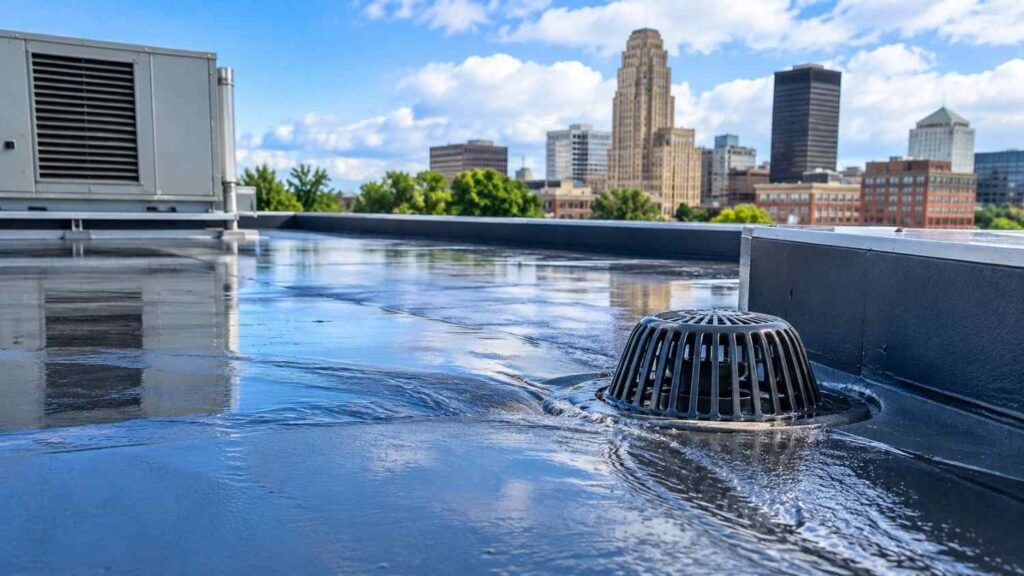
This blog discusses How Commercial Roof Drainage Systems Prevent Water Damage in Rochester, NY Buildings explaining why effective roof drainage is an important part of protecting large commercial properties. Commercial Roofing is about more than just picking the toughest materials and putting a waterproof layer on the roof. Rainwater, melting snow and seasonal weather changes are also concerns in large commercial buildings that require effective roof drainage systems. Inadequate drainage will result in water pooling on the roof, causing structural stresses, deterioration of roofing materials and costly maintenance issues. A good drainage system can be designed to assist in the removal of water from the roof surface and provide protection to the building over time.
Weather is a year-round phenomenon in Rochester, NY, affecting commercial properties. Commercial roofing systems can be subjected to extra stress due to heavy rain, winter snow, freezing temperatures, and frequent freeze-thaw cycles. For a warehouse, office, retail centre, industrial property, and other large properties, drainage solutions that are appropriate to the roof design, size, and water flow requirements are required. Knowing the commercial roof drainage system will help a property owner make informed decisions on maintenance and roofing.
Why Roof Drainage Is Important for Commercial Buildings
Commercial roofs are typically large enough to be able to hold significant amounts of rainwater and melted snow. When water is not allowed to flow towards the correct drainage points, it may sit on the roof for a long time.
But standing water can cause a number of issues, such as:
- Additional weight on the roof structure.
- Stressed roofing membranes and seams.
- Greater risk of leaks around vulnerable areas.
- Insulation and other roofing materials damage.
- Water seeping through roof penetrations.
- Greater need for maintenance and repair.
Appropriate commercial roof drainage should control the flow of water over the surface and lead it to a specific location. It also helps to minimize water accumulation around equipment, around roof edges and around joints and other weak points.
For larger commercial roofs, drains are an integral part of the roofing system and not an afterthought.
1. Understanding Commercial Roof Drainage Systems
Rainwater is collected by commercial roof drainage systems and safely channeled away from the roof. The setup will vary according to the roof incline, area, building layout and local weather conditions.
The following components are commonly used in most drainage systems of commercial structures:
| Drainage component | Main function |
| Internal roof drains | Collect water from designated areas and move it through internal drainage pipes |
| Gutters | Collect water along roof edges |
| Downspouts | Carry water from gutters towards ground-level drainage |
| Scuppers | Allow water to pass through openings in roof edges or parapet walls |
| Drainage outlets | Provide designated points for water to leave the roof |
| Roof slopes and tapered insulation | Help guide water towards drainage locations |
The components each serve a particular purpose. The system needs to operate in unison so as to avoid unwanted accumulation of water.
The layout of roof areas, structural needs and the anticipated volume of water to be collected must also be taken into consideration when designing a drainage system.
2. Internal Roof Drains for Large Commercial Buildings
Internal roof drains are commonly used on large commercial buildings with flat or low-slope roofs. The water from the roof surface is captured by these drains and conveyed to the internal piping systems.
Exterior gutters are not typically in the roof area and instead, internal drains are used. Water moves towards these collection points and is conveyed to the pipes within or under the building.
For commercial properties, it can be beneficial to protect most of the drainage system from direct exposure to the outside elements by utilizing an internal drainage system. It does need the right installation, convenient access to maintenance sites and routine checks, however.
Important considerations include:
- Correct positioning of roof drains.
- Suitable drain capacity for the roof area.
- Proper connection between drains and drainage pipes.
- Secure waterproofing around drain openings.
- Regular removal of leaves and debris.
- Inspection for blockages and slow drainage.
When internal drains get blocked, water can collect around the blockage. Therefore, regular inspections are particularly important in buildings that have large flat roof areas.
3. The Role of Commercial Roof Gutters
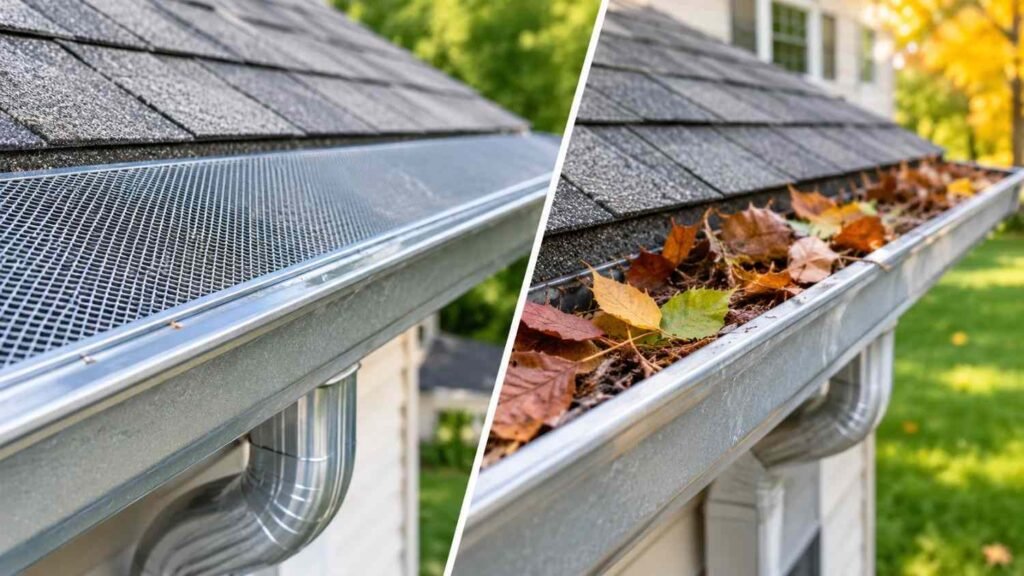
Commercial roof gutters collect water flowing towards the outer edges of a roof and direct it into downspouts. These are especially beneficial for buildings that have an exterior drainage system.
Depending on the design and drainage needs of the building, commercial roof gutters may be installed along the edges of the roof. They should be the right size, type, location and outlet configuration for the anticipated water flow.
For large commercial buildings, undersized or poorly maintained gutters can create problems during heavy rainfall. Water may overflow, collect near the building’s exterior, or reach areas that should remain protected.
When assessing commercial roof gutters, property owners should look into:
- Gutter dimensions and water capacity.
- Material durability and corrosion resistance.
- Secure attachment to the building.
- Appropriate positioning of downspouts.
- Protection against leaves and debris.
- Access for regular cleaning and inspection.
Also look for sags and loose joints, corrosion, and leaks in gutters. Although the rest of the roof may be in good condition, these problems can lead to decreased drainage performance.
4. Flat Roof Drainage Rochester: Managing Water on Low-Slope Roofs
One of the key factors to take into account for commercial flat roof drains is flat roof drainage Rochester. These roofs can look flat, but often should be sloped with attention to detail to direct water to drains or outlets.
A completely level roof surface can allow water to remain in low areas. The risk can be minimized by using proper drainage by directing the water to collection points.
There are several common solutions to the drainage problem on flat roofs used in commercial buildings:
Internal drainage: Roof drains collect water and direct it through internal pipes.
Scupper drainage: Openings in parapet walls allow water to move from the roof to an exterior drainage location.
Gutter-based drainage: Gutters collect water along the roof perimeter and direct it through downspouts.
Tapered insulation: Specially designed insulation creates gradual slopes that help water move towards drainage outlets.
The best solution depends on the structure of the building, the roof of the building, and the current drainage system.
Why Ponding Water Is a Concern
Ponding water is water that does not drain away properly after the rain. On some low-slope roofs, there can be temporary water accumulations, which are not necessarily issues; however, if ponding is present for a prolonged period, it is important to investigate.
Potential concerns include:
- Additional load on the roof.
- Faster deterioration of some roofing materials.
- Greater exposure of seams and joints to standing water.
- Increased risk of water entering through damaged areas.
- Debris collecting in low sections.
- Repeated maintenance problems.
A qualified roofing professional can determine if ponding is associated with blocked drains, lack of slope, roof settling or something else.
While it may be sufficient to eliminate visible water, it is crucial to understand the root of the issue in order to protect it in the long run.
5. How Rochester Weather Affects Commercial Roof Drainage
There are seasonal weather conditions that can affect commercial roof drainage year-round in Rochester. Water can run over a roof in any manner influenced by rain, snow, ice and varying temperature conditions.
In warmer seasons, during times of heavy rain, drains, gutters and downspouts may be forced to perform beyond their capacity. Other items such as leaves, dirt and debris can also get into the drainage openings and create a restriction of water flow.
Melting snow can also provide extra water during the winter that must be drained away. As the temperature drops, there’s a possibility of moisture still freezing around outlets, gutters, and other drainage elements.
Existing weaknesses in roofing materials, joints and drainage connections can also be exposed due to freeze-thaw cycles.
There are a number of elements commercial property owners need to be mindful of:
- Blocked roof drains before and during the rainy season.
- Snow and ice accumulation around drainage outlets.
- Gutter condition and downspout connections.
- Signs of water collecting in low roof areas.
- Leaks or moisture damage inside the building.
- Changes in drainage performance after storms.
Seasonal inspections may be useful in detecting emerging issues in advance of them becoming more disruptive.
6. Preventing Roof Leaks Through Proper Drainage
Some of the causes of roof leaks are damaged membranes, worn-down flashing, poor seams, and drainage issues.
If the water does not flow away properly, it can stay in close contact with vulnerable areas such as seams, roof penetrations, and other areas for longer than expected. This can potentially lead to greater impact on already present defects and increase the risk of water infiltration.
A well-designed drainage system can help minimize unwanted water pooling and improve the assembly’s performance.
The following areas should be paid special attention to by property managers:
- Roof drains and drain connections.
- HVAC equipment and other rooftop units.
- Roof penetrations and pipe openings.
- Membrane seams and joints.
- Parapet walls and roof edges.
- Scuppers and drainage outlets.
When water stains are found on the ceilings, damp insulation is found in a commercial building or a leak occurs repeatedly, the roof and drainage system should be checked. Identification of the source at an early stage can avoid further damage to the interior finishes, equipment, and storage materials.
7. Choosing the Right Drainage System for a Commercial Roof
Not all commercial buildings will require the same type of drainage system. The following factors have to be considered in determining the right solution: roof dimensions, roof slope, roof construction, roofing materials, and expected rainfall.
A warehouse will likely have a different drainage configuration as compared to a multi-level office building. Likewise, a commercial building with parapet walls could have a different solution than a building that is intended to drain the exterior gutters.
When choosing or changing a drainage system, take into account:
| Factor | Why it matters |
| Roof size | Influences the amount of water that must be managed |
| Roof slope | Determines how water moves towards drainage points |
| Building structure | Affects drainage layout and installation requirements |
| Roofing material | Influences compatible drainage details and waterproofing |
| Local weather | Helps inform drainage capacity and seasonal maintenance |
| Existing outlets | Determines whether current drainage components can be retained |
| Maintenance access | Makes inspection and cleaning easier |
Qualified individuals should use the appropriate design requirements to assess drainage capacity. A roof cannot be accurately judged, and a satisfactory system can be installed without a correct guess on the number or size of drains.
8. The Importance of Regular Commercial Roof Drainage Maintenance
Even a properly designed drainage system needs regular maintenance. Packaging materials, leaves, branches, dirt, and other debris can gather around drains, gutters, and outlets.
These materials can block water from evaporating from the roof if they are blocking the water flow, then water can accumulate in the roof.
An actual maintenance program should consist of:
- Drain Cleaning: Clean accessible roof drains and openings.
- Gutter inspection: Check for blockages, leaks, corrosion, and loose connections.
- Downspout checks: Make sure that water flows well through the downspouts.
- Outlet inspection: Check for damage or if water flow is restricted.
- Roof surface review: Identify low areas where water repeatedly collects.
- Interior inspection: Check for ceiling stains, dampness, and other possible signs of water infiltration.
The time frame for the inspection should take into account the condition of the roof, adjacent trees, weather exposure and building needs. It may be necessary to make further investigations following heavy storms or other major weather events.
Training and awareness of personnel, and appropriate measures for accessing roofs and fall protection, should be followed when carrying out maintenance. Untrained personnel should never be sent on commercial roofs to clean up debris or to look at the drainage problem.
9. How Drainage Problems Affect Commercial Building Operations
Problems with drainage can impact more than the roof. Water can cause delays in normal operations, damage equipment, cause damage to stored goods and cause additional repair tasks within a commercial building.
Leaks can also impact inventory or storage spaces, for instance, if it happens inside of a warehouse. Water can infiltrate an office building and cause damage to ceilings, floors, electrical systems and work areas.
Retail and commercial buildings can also be affected, as water damage could have an impact on the customer space or access to the building.
Drainage-related problems can lead to:
- Unexpected repair expenses.
- Damage to interior materials.
- Disruptions to workers and business activities.
- Product damage or equipment damage.
- Increased maintenance requirements.
- The risk of leaks or wet surfaces to safety.
Thus, it is important for property managers to have a comprehensive building maintenance plan and include drainage inspections.
10. Commercial Roof Drainage and Building Safety
Standing water can pose dangers to individuals performing maintenance and/or work activities in a commercial building. Roof access can be more dangerous during wet, icy or snowy weather and interior leaks can lead to slippery floors.
Maintaining a good drainage system will help control water flow, but will not eliminate all the risks of weather.
Property managers need to have in place protocols for when they see a leak, a drainage obstruction, or water entering a building space that is occupied.
Important steps include:
- Restricting access to affected areas when necessary.
- Protecting equipment and materials from water exposure.
- Reporting leaks promptly.
- Arranging professional roof inspections.
- Following appropriate roof-access safety procedures.
- Keeping maintenance records.
Commercial roofs should be drained by trained personnel trained in working at height and around rooftop machinery.
11. Signs That a Commercial Roof Drainage System Needs Attention
Drainage issues can get worse over time. Early warning signs can help property owners schedule inspections prior to further damage.
Watch for the following indications:
| Warning sign | Possible concern |
| Water remains on the roof after rainfall | Blocked drainage or insufficient slope |
| Gutters overflow | Blockage or inadequate drainage capacity |
| Water stains on ceilings | Possible roof leakage |
| Rust or corrosion around drainage components | Material deterioration |
| Loose or separated gutter joints | Potential water leakage |
| Debris around roof outlets | Restricted water flow |
| Repeated leaks in the same area | An unresolved roofing or drainage issue |
| Water collecting near exterior walls | Gutter or downspout problems |
These signs are not necessarily clues to the exact cause. A professional evaluation of the situation is required to ascertain if it is a drainage problem, roofing membrane problem, flashing problem, structural problem or a blend of all of the above.
12. How Commercial Roofing Contractors Evaluate Drainage Systems
The commercial roofing contractors can help the property owner to evaluate the existing drainage and remedy the areas that need attention, and prepare for appropriate repair or enhancement.
An assessment can include examining the roof, the location of drains, gutters, downspouts and any place where water seems to pool.
Property owners must ask contractors to clarify in a drainage project:
- The condition of existing drainage components.
- Whether outlets and drains are working.
- Any signs of ponding water.
- Whether the roof slope directs water effectively.
- The condition of waterproofing around drainage openings.
- Recommended repairs or improvements.
- Expected maintenance requirements.
It is also useful to request a written scope of work. This should explain the identified problems, recommended solutions, materials, and any relevant project limitations.
The roofing contractor needs to be experienced in the type of roof and drainage system that was installed on the building. Homeowners must also check the insurance, qualifications, references and project documentation prior to hiring a contractor.
13. Repairing or Upgrading an Existing Commercial Drainage System
There are some commercial drainage issues that can be handled by cleaning or replacing damaged parts. Other situations might call for more extensive work.
Depending on the problem’s cause, the appropriate solution will be employed.
Examples include:
Blocked drains: Cleaning may restore water flow when debris is the main issue.
Damaged gutters: Repair or replacement may be necessary if joints, sections, or supports have deteriorated.
Leaking drain connections: Damaged waterproofing or connections may need professional repair.
Persistent ponding: A professional assessment may identify the need to correct drainage slopes or address structural concerns.
Insufficient drainage capacity: The existing design may need to be reviewed to determine whether additional or upgraded drainage components are appropriate.
Care needs to be taken with planning the upgrades to ensure they are compatible with the existing roofing system. Roof drains, membranes, or structural changes shall not be altered without proper technical considerations.
Conclusion
Careful consideration of roof drainage is important in Commercial Roofing Rochester NY, especially when it comes to large commercial buildings that are subject to varying weather conditions. Water is moved away from vulnerable areas through internal roof drains, commercial roof gutters, downspouts, scuppers and well-designed roof slopes.
Poorly designed, damaged or clogged drainage systems can cause water to pool on a roof and lead to leaks, material degradation and disruption of operations. Regular inspection, appropriate maintenance and expert evaluations can assist in noticing issues before they escalate.
Investing in roof drainage should be seen as a necessary investment for commercial building owners in Rochester. Knowing the operation of the system and maintaining system components in good working order will help maintain the integrity of the roofing system and the property below.
Frequently Asked Questions
1. Why is roof drainage important for commercial buildings?
Roof drainage moves rainwater and melting snow away from the roof, helping reduce ponding, leaks, material deterioration, and unnecessary structural loading.
2. What is a commercial roof drainage system?
It is a combination of drains, gutters, downspouts, scuppers, outlets, and roof slopes designed to direct water away from commercial roof surfaces.
3. How does an internal roof drain work?
An internal roof drain collects water from a designated roof area and directs it through connected piping towards the building’s drainage system.
4. What causes ponding water on commercial roofs?
Ponding may result from blocked drains, inadequate roof slope, structural settlement, or drainage components that are not working correctly.
5. Are commercial roof gutters necessary?
Gutters are useful for buildings designed with exterior drainage systems because they collect roof runoff and direct it towards downspouts.
6. How often should commercial roof drains be cleaned?
Cleaning frequency depends on roof conditions, surrounding debris, and weather exposure. Regular inspections help determine when cleaning is needed.
7. How does Rochester weather affect commercial roof drainage?
Rainfall, snow, ice, and freeze-thaw cycles can affect drainage performance and increase the importance of seasonal inspections and maintenance.
8. Can blocked roof drains cause leaks?
Yes. Blocked drains can allow water to accumulate, increasing exposure around roof seams, penetrations, and other vulnerable areas.
9. What are scuppers on commercial roofs?
Scuppers are openings in roof edges or parapet walls that allow water to flow away from the roof towards an exterior drainage location.
10. When should commercial roof drainage be inspected?
Drainage should be inspected regularly and after significant weather events, particularly when there are signs of ponding, overflow, or interior leaks.